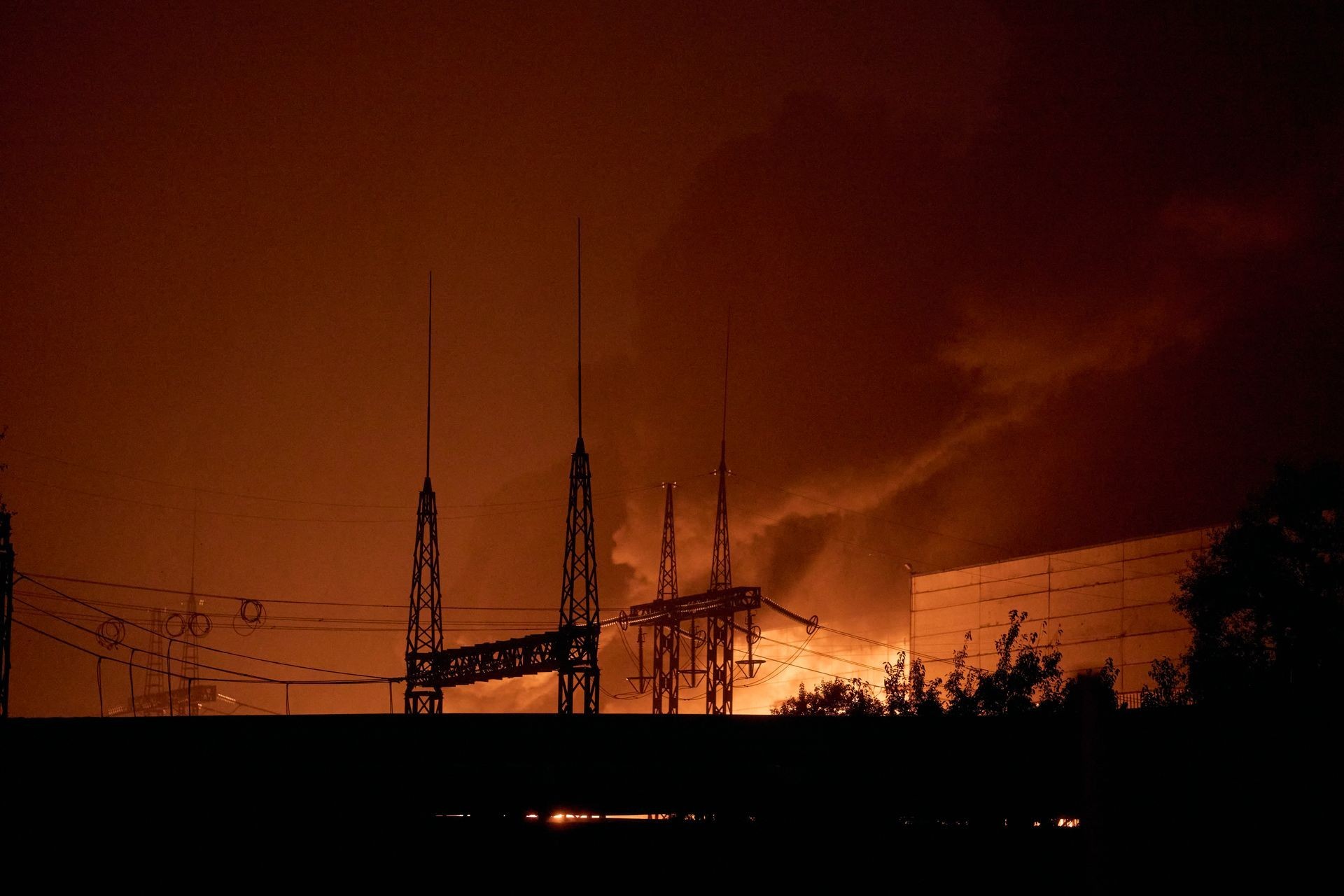
In a command post a few miles from the line, an officer watches a video feed stutter, buffer and resume four seconds later. The drone is still up. The target has moved. On a front where artillery is corrected by what a small screen shows, four seconds is a long time, and Ukrainian officers have started to treat the delay as a supplier problem rather than a network one.
On Nov 14 President Volodymyr Zelensky said the speed limits applied to military-grade Starshield terminals are producing dangerous political consequences, because they have slowed communications at the front. He said his government has opened an inquiry into a new round of restrictions, according to a statement from his office.
The distinction his officials draw is between an interruption and a policy. Earlier episodes of reduced service were described as temporary, the kind of thing that happens when a network is stressed or a contract is renegotiated. The current limits, Ukrainian officials say, have persisted, which makes them look less like a fault and more like a decision.
Starshield is SpaceX’s government line, a separate product from the consumer Starlink service that Ukrainian soldiers began using within days of the 2022 invasion. It is built on the same satellites and the same ground hardware, sold to defense agencies rather than households, and given a name of its own so that the two businesses could be priced and governed differently. In Ukraine the two have become hard to tell apart.
That overlap is the source of the trouble. Starshield carries a large share of Ukrainian military communications, from drone control to the links that connect headquarters to forward units, and there is no domestic substitute at the same scale. A service that is one of several options in peacetime becomes the only option in a war, and the vendor’s terms become a matter of national security.
The terms themselves have never been published in any detail. Delivery schedules, throughput limits and the rules under which service can be reduced are set by the company, not negotiated in public, and Ukrainian officials have complained for years that they learn about changes after they take effect. A government that depends on a foreign supplier for command links has little recourse beyond complaint.
SpaceX has not publicly responded to the president’s remarks. That silence is itself part of the story: in a dispute with a head of state, the absence of a reply leaves the other side’s account standing.
The delivery question sits underneath the throttling question. Terminals arrive when they arrive, funded by a patchwork of national governments, European programs and private donations, and the pace has never matched the requests from Kyiv. Officials have described the pattern as one in which the hardware shows up after a decision has been made elsewhere, and the software limits follow the same logic.
Analysts who follow the satellite business see a structural problem rather than a squabble. A single company operates the constellation, sets the service tiers, builds the terminals and decides which customer gets which capability, and no regulator has ever had to think about what that means during a land war. Procurement law was written for suppliers with competitors, and there is no competitor here.
The political dimension is harder to separate from the personal one. The company’s owner has commented on the war repeatedly over four years, sometimes in terms that Ukrainian officials found objectionable, and each episode has raised the same question in Kyiv: whether a communications lifeline should run through a business whose public positions shift with its owner’s mood. That question has been asked so often that it has become a background condition of the war.
Europe has tried to answer it. Several governments have funded alternative satellite capacity, and the bloc has talked about a constellation of its own for years, but the schedules are measured in the next decade and the coverage is thinner.
The immediate effect of the president’s statement is to put the dispute on the record. A formal inquiry gives Kyiv a channel to demand explanations and a way to document what it says it has lost. It does not restore throughput, and it does not change the fact that the limits are applied by a company outside Ukrainian jurisdiction.
What the terminals actually do at the front is unglamorous and essential. They carry the video from reconnaissance drones, the coordinates that go to gun crews, the messages between units that have no fiber and no radio line of sight. When that pipe narrows, the army does not stop fighting; it fights more slowly, with more mistakes, and with a greater appetite for risks that a working link would have made unnecessary.
A person familiar with how the terminals are distributed said the limits have been applied unevenly across units, which has fed a suspicion that they follow operational judgments made far from the front. That suspicion is difficult to disprove from the outside, and it is the reason the president’s language has turned from technical complaint to political warning.
For SpaceX the calculation is commercial as much as reputational. Starshield is a growth business built on the premise that governments want a partner rather than a utility, and every dispute over access becomes a data point for procurement officials weighing a second supplier. The company’s dominant position in launch and in low-orbit broadband gives it room to absorb criticism, though not unlimited room.
None of this will be settled by statements. The terminals will keep working at whatever speed the network allows, the inquiry will produce a file, and the officers in the command post will keep watching their screens for the four seconds that decide whether the feed shows what was there or what used to be there.