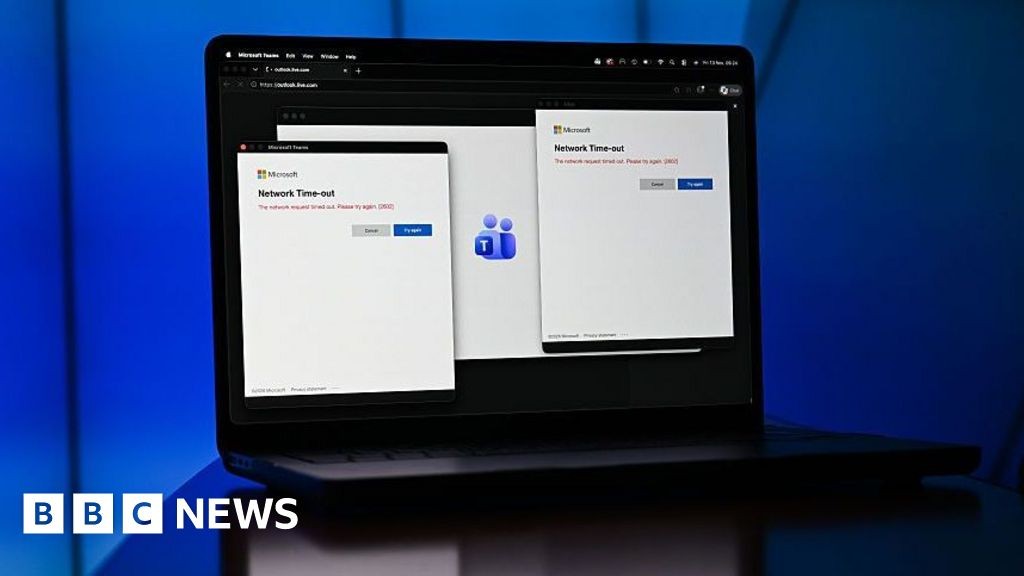
On Nov 13 Microsoft posted the sentence that ends every outage: its consumer services had been fully restored. Enterprise customers of Microsoft 365 were told something narrower, that those services were showing continued signs of recovery. Before the company would treat the business side as fixed, it said it was monitoring “the backlog of emails” that had piled up during the incident.
That distinction matters to anyone who opened a work laptop that week and found a mailbox that looked normal and was not. A status page measures whether Microsoft’s systems are answering requests. It does not measure whether the message your supplier sent on the worst afternoon of the outage has arrived, or whether the approval it carried missed a deadline that nobody will connect to a cloud provider three weeks from now.
Consumer services, in Microsoft’s usage, means the products an individual signs into with a personal account. Enterprise services are the ones a company buys on a contract, with an administrator, a support agreement and a compliance obligation attached. The first group came back. The second was still described as recovering when the update went out.
An email backlog sounds like housekeeping. It is not. Mail servers hold undelivered messages in queues and retry them on a schedule, and a large queue drains in an order that has little to do with what any individual message was for. A confirmation sent at the wrong minute can land six hours later, arrive twice, or bounce in a way that looks to the sender like a typo in the address.
The status page language was unusually direct about the company’s own confidence. “Because the impact of this incident was so severe, we will monitor for an extended period to ensure no additional mitigation measures are needed,” Microsoft wrote. Read plainly: the fix is in, the company does not yet trust it, and it intends to keep watching rather than declare the matter closed.
What the update does not do is explain the failure. It describes recovery in sequence, from the consumer side to the enterprise side, and leaves the cause, the number of affected tenants and the question of whether any message was lost for good outside the text. A company of Microsoft’s size usually publishes a fuller account later, through incident reports that business customers receive under their contracts rather than on a public page.
There is a defensible reading of that sequence. A public status page is written for the minute, not the post-mortem. Its job is to tell a million strangers whether to try again, and the language it uses is deliberately thin.
Saying that a service is recovering, and that monitoring will continue because the incident was severe, is more candid than the all-clear that most outages end with. Enterprise administrators also get detail the public page never carries, and that is where the operational answer will live.
The less comfortable reading is that the two sentences describe two different products sharing one failure. Consumer restoration is a statement about a login and a mailbox. Enterprise restoration is a statement about a queue, a retention policy and a set of integrations that a customer’s own systems depend on. Those do not recover on the same clock, and the update quietly admits it by putting the email backlog ahead of any declaration.
For a business, the practical question is not whether Microsoft is fixed. It is which of last week’s messages never made it. A queue that drains is not a queue that delivered everything, and the gaps surface later as missing invoices, unanswered approvals and a customer who insists they wrote twice.
There is a second, duller cost. Recovery work competes with the ordinary work of the week, and the people who chase a stranded purchase order are usually the same people who were supposed to be closing the quarter. The outage itself lasted hours. The reconciliation lasts until someone decides the missing items no longer matter.
The scale of the dependency is what makes a single bad afternoon expensive. A company that sells software to other companies inherits every one of its vendors’ worst days, and most of those vendors now run on the same three or four clouds. When one of them publishes a status update, thousands of finance, legal and logistics teams read it as if it were about their own business, because for a few days it is.
Microsoft has said it will keep watching. The useful version of that promise would be a count: how many messages sat in the queue, how long the oldest one waited, and whether any were dropped rather than delayed. Numbers of that kind are what an administrator can take to a customer who wants to know why the order slipped.
Until then, the honest summary of the week is the one the company wrote itself. The consumer side is back. The inboxes are still catching up, and the tail of a severe incident is the part that arrives after the status page has stopped being interesting.