On Nov 15 Elon Musk answered a compliment by correcting it, and the correction is the story. Someone had put a figure on what a single Starship launch could add to Starlink — 50 Tbps of bandwidth — and Musk replied that the number would not lift the world’s total international bandwidth as much as it sounds, because delivering that kind of capacity everywhere on the planet requires a very large number of satellites in low orbit. Then he gave the count: SpaceX’s communications constellation will eventually pass 100,000 satellites, most of them V4 or V5. What that changes is the category the company competes in, from a satellite operator to an industrial presence in orbit that regulators will have to license, watch and eventually constrain.
A constellation of that size is not a network with a satellite component; it is an industrial operation conducted in orbit, with the manufacturing line, the launch cadence and the paperwork of one. The difference shows up in who has to be persuaded before anything flies, and in how much of the plan depends on decisions taken outside the company.
The arithmetic he was pushing back on deserves a second look. Fifty terabits per second from one launch is a large figure in the abstract and a modest one against global traffic, and Musk’s reason for the gap is geometric rather than technical. A satellite in low orbit covers a moving footprint, and capacity only earns anything where that footprint meets paying demand. Demand is spread across oceans, deserts and latitudes where very little of it exists, so covering the planet and serving the planet are different engineering problems.
Overlapping satellites are the answer to that, and overlap is why the count has to grow. To put capacity over a city at the moment its users want it, you need several satellites within reach of the same ground terminal, which means a constellation many times larger than a coverage map implies. The 100,000 figure follows from the geometry, not from optimism about subscriber growth.
V4 and V5 are the other half of the argument. Each generation carries more throughput for its mass, so capability can rise while the count rises slowly. Musk’s number is therefore a statement about the eventual shape of the network rather than a schedule, and he did not give a date.
Spectrum is where the number starts to bite. Radio frequencies are coordinated between governments before any satellite is licensed to transmit, and the orbital shells a system occupies are assigned through a process that rewards whoever files first and then builds on time. A 100,000-satellite plan is a claim on orbital real estate as much as a capacity forecast, and the claim has to be defended in front of administrations that treat spectrum as a national asset.
Landing rights are the second gate. Every country where Starlink sells service grants a licence on its own terms, and those terms increasingly touch foreign ownership of telecom infrastructure, lawful interception and rural coverage obligations. A constellation of this size multiplies that work without simplifying it, because the satellites are the same in every market and the regulators are not.
The physical risk model changes with the count as well. Tens of thousands of active satellites mean a corresponding volume of conjunction warnings, avoidance manoeuvres and controlled reentries, and the operators who manage that traffic are also the ones competing for the same shells. Regulators have spent a decade writing rules that require defunct hardware to come down within a few years, and none of those rules were drafted with a single company owning a six-figure population of spacecraft in mind.
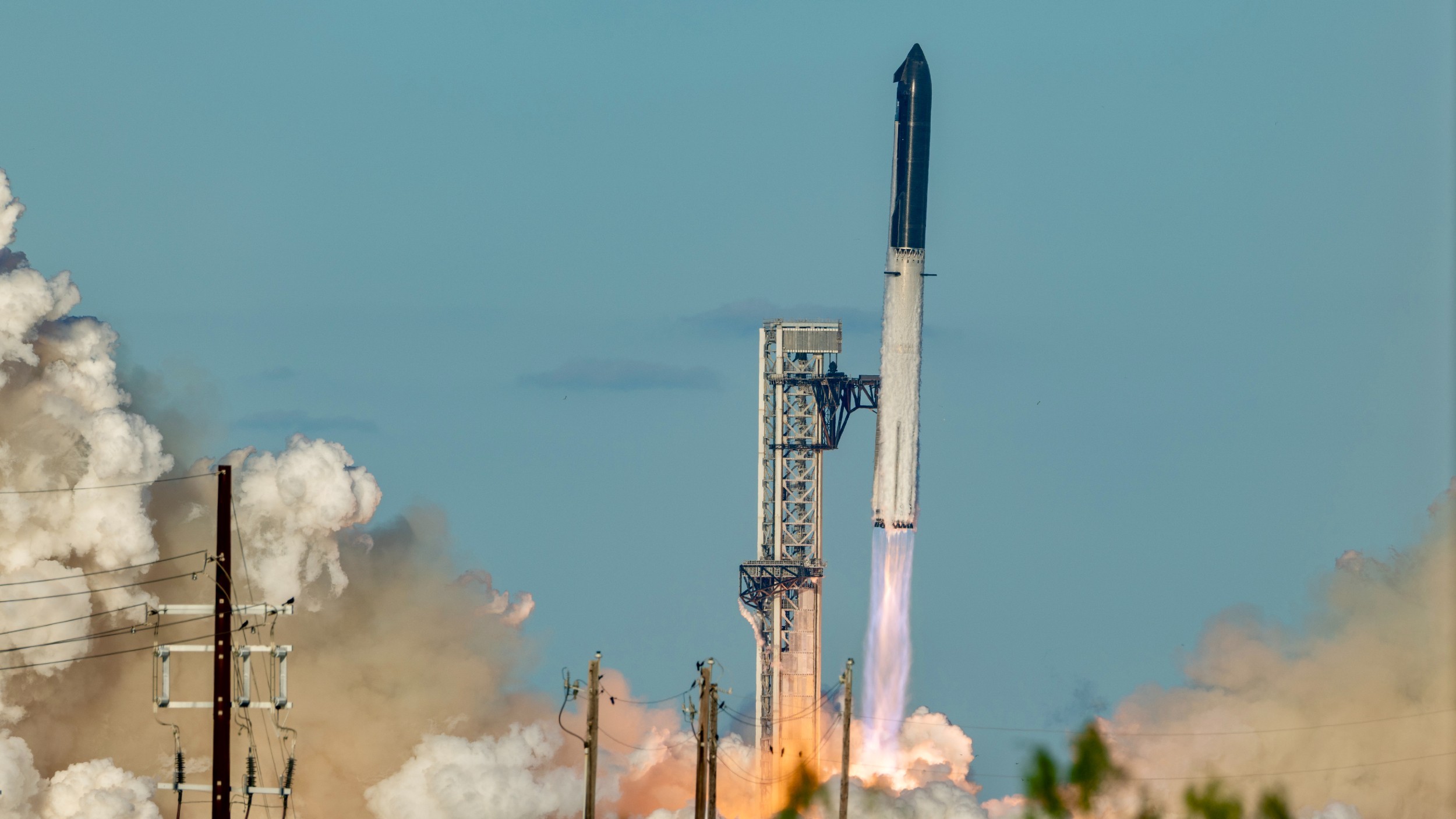
The launch side is the constraint Musk did not dwell on. Fifty terabits per launch only becomes a global figure through repetition, and repetition depends on Starship flying often, recovering cleanly and turning around quickly. Every link in that chain has been demonstrated in pieces and none of it at the cadence the 100,000 number requires.
Rival systems complicate the filing picture. Other governments and companies have their own constellation plans, and the shells and frequencies that work are finite. The result is a queue settled politically as much as technically, and a company that arrives with the largest claim gets the most attention from the regulators it would rather not need.
The commercial question sits underneath all of it. Bandwidth is worth what someone will pay for it, and the places where Starlink earns most are the places where terrestrial fibre already reaches. The 100,000 satellites are justified by global coverage; the revenue that pays for them comes from a much smaller map.
That is why the correction is more interesting than the compliment he was answering. Musk was told his rockets were about to add a large amount of capacity, and he responded by lowering the figure and raising the ambition in the same breath. Both moves point at the same thing: the scarce inputs are spectrum, orbital shells and public permission, not throughput.
Whether any government can police a system whose failure modes are global is the question the plan leaves open. A state can license a satellite; it cannot license a constellation’s consequences. One hundred thousand spacecraft are a consequence with a schedule attached, and no regulator has yet been given the tools to review it as a whole.
Until one is, the number stands as a statement of intent rather than a capability. Musk has told the market, the rival constellations and the licensing authorities what he intends to own in orbit, and the reply will come back one administration at a time.