Blake Scholl announced the cancellation himself, in a post on X, the way founders increasingly deliver news that would once have gone through a press release.
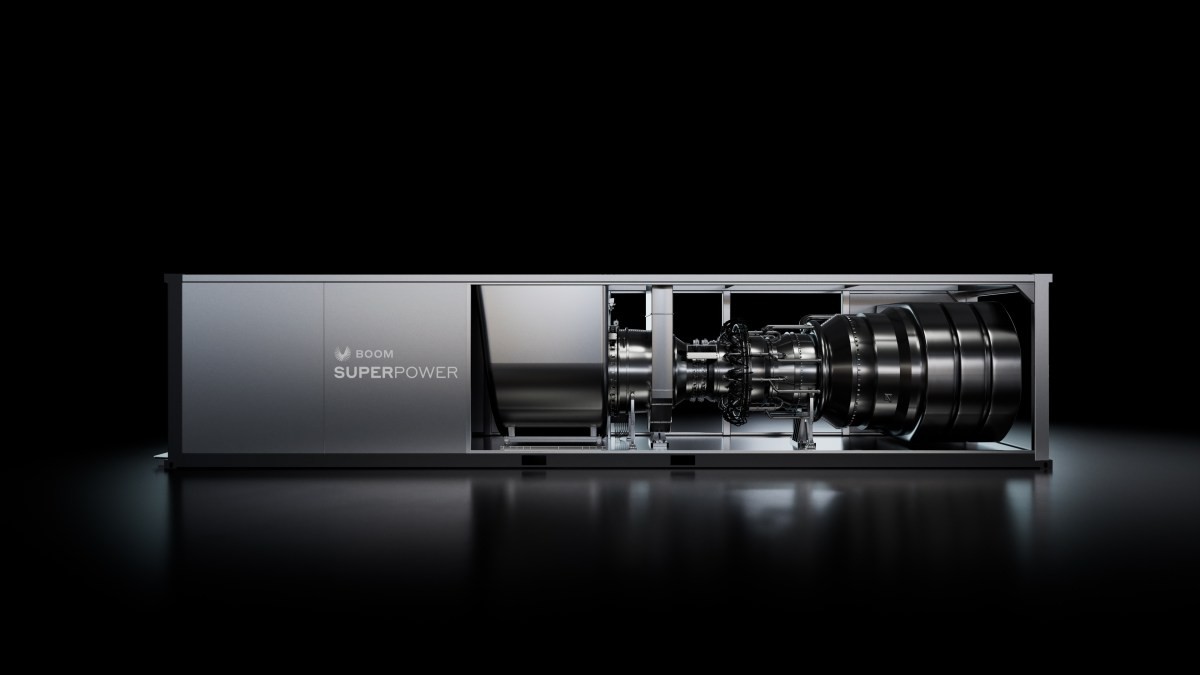
The chief executive of Boom Supersonic said on September 25 that Crusoe is no longer the launch customer for Superpower, Boom’s stationary gas turbine. Crusoe had planned to spend $1.25 billion on 29 units rated at 42 megawatts each, with deliveries beginning in 2027. That order is gone from the near term.
Scholl wrote that the turbines are no longer part of Crusoe’s primary power strategy, which makes the partnership unreasonable for both sides. Crusoe confirmed the termination to TechCrunch. Andrew Schmitt, a spokesman for the company, said that as its project portfolio grows it will choose power sources site by site, including wind, solar, batteries and the grid.
Boom says the program continues. Scholl said the company will still deliver about 250 megawatts of turbines to other sites next year and is targeting 1 gigawatt in 2028. A turbine business needs a first customer, though, and losing the launch order shifts that burden onto whatever contracts Boom has not yet announced.
The decision reflects a split that has opened inside the data center industry over how to power AI campuses. One model runs load mainly from the grid with turbines held as backup, and it describes the 1.2 gigawatt Abilene campus built for Oracle and OpenAI. The other relies on on-site gas generation as the primary supply, which is how a 900 megawatt campus built for Microsoft is configured.
Choosing between those approaches is a financial calculation as much as an engineering one. Grid power is cheaper per megawatt-hour, but the interconnection queue introduces schedule risk that can delay a project by years and, as Oracle’s New Mexico notice shows, put rent obligations on a separate clock. On-site generation removes the queue but adds fuel contracts, emissions permitting and a capital cost that has to be financed up front.
Turbines occupy an awkward position in that trade-off. They are fast to site compared with a new substation and fast to permit compared with a nuclear plant, but they are the most expensive way to make electricity at scale in most American markets. A developer that can secure grid capacity has little reason to buy machines at a cost that only makes sense when speed is the binding constraint.
Crusoe’s own trajectory explains the timing. The company raised $3.9 billion on September 17, days before it cancelled its largest equipment order. New capital brings new scrutiny of unit economics, and the first item in that review is usually the biggest line item in the construction budget.
The company began by capturing flare gas from oil fields to power computing, a business built on cheap stranded energy. That heritage shaped its willingness to own generation rather than buy it. Its newer projects serve customers whose workloads demand reliability levels that a single on-site plant with a fuel supply contract can complicate.
Boom, meanwhile, has bet its credibility on building a supersonic airliner, with the turbine business positioned as a nearer-term revenue source that uses related engineering work. Stationary turbines and aircraft engines share design disciplines but not customers, suppliers or regulatory paths, and a spinning reserve of orders in one does not guarantee the other.
Financing conditions shape these choices as much as engineering does. Turbines, transformers and switchgear have long lead times and require payment schedules that consume capital before any revenue arrives. A developer that has just raised equity has every incentive to convert that equity into assets with the fastest path to billing, and a grid connection it does not have to build is the fastest path of all.
Analysts said the episode illustrates how quickly power strategies are being revised as developers learn what their projects actually cost. Announcements made eighteen months ago assumed equipment pricing, fuel costs and interconnection timelines that have all moved, and several companies have quietly revised plans without public disclosure.
The shift also affects equipment vendors differently. Turbine makers, transformer manufacturers and switchgear suppliers all sold into a market that assumed data centers would build their own generation. A move back toward grid supply redirects that spending to utilities and transmission, where lead times are longer and pricing is regulated rather than negotiated.
A single order reversal does not establish a trend, and other developers continue to buy turbines for sites where the grid cannot reach them in time. The direction of the market will show up in how many of those orders survive their next financing review.
What the cancellation does not tell you is what Crusoe will build instead. The company has not said which sites the freed capital will go to, or whether it intends to buy turbines from another supplier. Its next power announcement will answer a question the whole sector is asking.