The timing was not subtle. On the morning of Oct. 22, Micron Technology told employees around the world that from its 2027 fiscal year it would pay a quarterly bonus tied to company profit, to everyone, in every country. A few hours later, eleven union officers at the company’s Taoyuan plant in northern Taiwan began a 24-hour strike, carrying banners that said the company had never given them a number.
The strike is small. Eleven people cannot stop a DRAM fab, and the union described the action as a warning rather than a shutdown. What it exposed is a gap between the way Micron now talks about profit sharing and the way its Taiwanese workforce reads a bonus promise, in a year when memory prices have made the company one of the most watched suppliers in the AI supply chain.
Micron said the policy covers all employees globally from fiscal 2027 and pays out quarterly, with the amount linked to profit. The company framed it as a long-term commitment to share results with the people who produce them.
The Taoyuan union’s objection is not to the principle. According to the union, the company has not published a formula, a floor, or a schedule for how the payout is calculated, which leaves the benefit dependent on management discretion each quarter. Digitimes reported that close to 70% of the Taoyuan local’s members voted against the company’s new bonus proposal.
Micron declined to comment on the strike beyond its policy announcement. A person familiar with the company’s position said the global framework was designed to be applied consistently across sites, and that local details are still being worked out with employee representatives.
That answer will not settle much in Taiwan, where a bonus is not a perk but a component of pay. Taiwanese technology companies have long built compensation around year-end bonuses that can run to several months of salary, and workers treat the size of that payment as the real measure of a good year. A quarterly profit share is a different instrument: it moves with the cycle, and in a downturn it can go to zero.
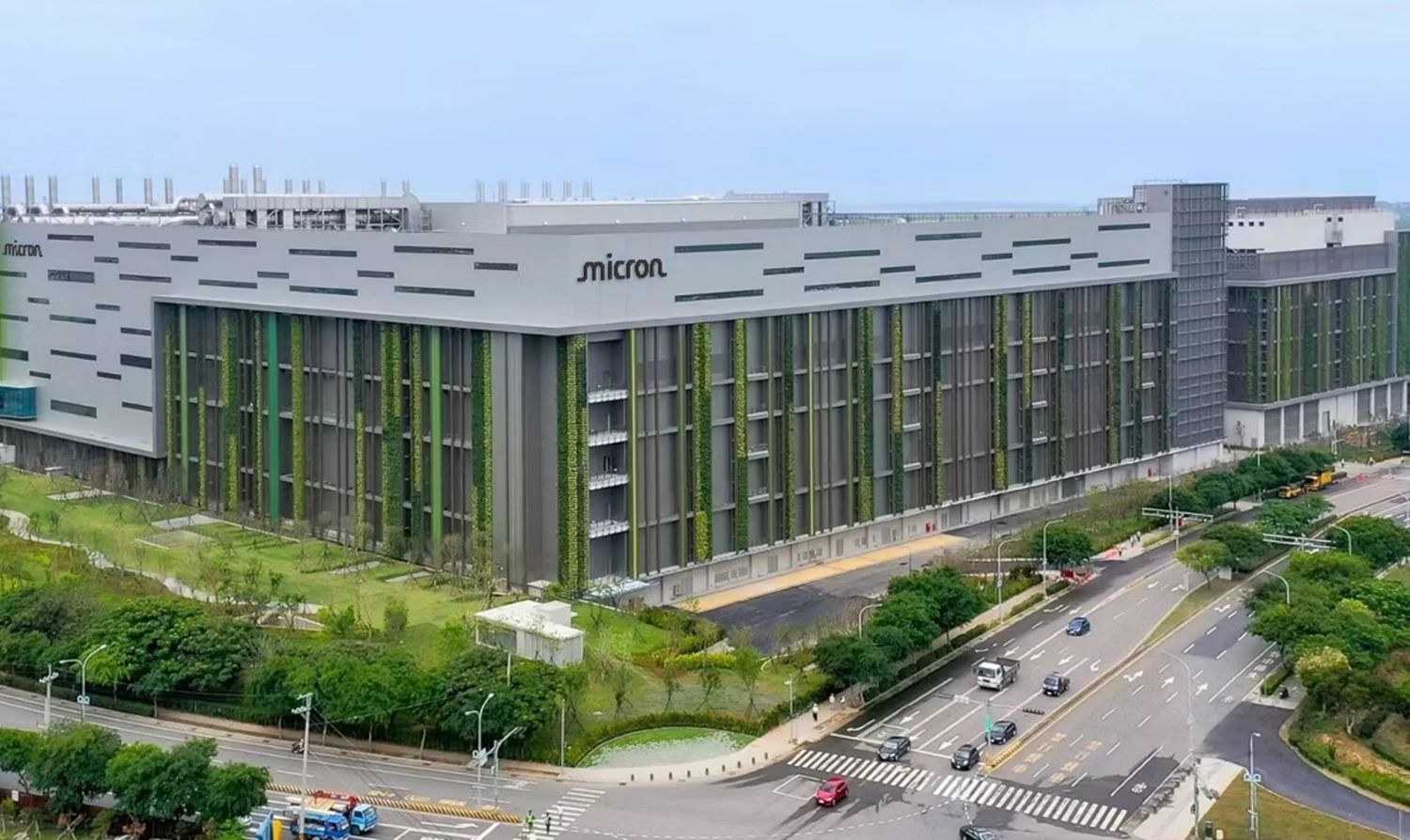
For Micron, the cycle has been going up. Demand for high-bandwidth memory, the stacked DRAM that sits beside AI accelerators, has pushed prices and margins higher and made the company’s Taiwan plants central to its plans. Taoyuan produces DRAM wafers; Taichung runs DRAM and the advanced packaging where memory dies are stacked and tested. Both sites sit inside the supply chain that Nvidia and its customers depend on.
That dependence is why a dispute over bonus mechanics gets attention beyond the factory gate. Memory supply is tight, qualification cycles are long, and a customer that loses confidence in a supplier’s ability to run its fabs smoothly has limited places to go. Micron is one of three companies that can build HBM at scale.
The union’s bargaining power is partly political. Taiwan’s labour law gives collective agreements force, and a dispute that reaches mediation becomes a public record. Earlier this month the Taichung plant reached an agreement with its union and withdrew a mediation session scheduled for Oct. 22, which the Taoyuan local has cited as evidence that deals are possible when management negotiates locally.
“The company announced a global principle and expected local unions to accept it as a plan,” said a labour researcher at a Taipei university who follows semiconductor bargaining. “In Taiwan, a principle without a formula is a negotiating position, not a policy.”
Management’s counter-argument has its own logic. A formula fixed in advance is hard to change when the cycle turns, and Micron has been through two brutal downturns in the past four years. A discretionary pool lets the company protect cash when prices collapse, which is precisely when layoffs would otherwise be on the table.
The risk for Micron is that the argument becomes about trust rather than arithmetic. Taiwanese engineers have watched the company cut jobs and slow expansion during the last memory slump, and they know that a quarterly bonus linked to profit is worth the most in the years when they least need it.
Analysts said the immediate production impact is negligible. A 24-hour walkout by eleven people does not move wafer starts, and Micron has said output is unaffected. The question is whether the Taoyuan local can build support in Taichung, where the workforce is larger and the packaging lines are more sensitive to disruption.
There is also a competitive dimension. Samsung and SK Hynix have their own labour disputes and their own bonus structures, and all three companies are competing for the same pool of process engineers in a region where experienced HBM staff are scarce. Compensation packages are part of that competition, and a public fight over bonus terms is not a recruiting advantage.
The union has said it will return to the table and is demanding a written formula before the fiscal year begins. Micron has said discussions with employee representatives are continuing.
For now the strike is over and the fabs are running. The next date that matters is not on a production calendar but in a bargaining room, where the question is whether a global profit-sharing policy can be made specific enough to satisfy a workforce that has learned to read the fine print.