
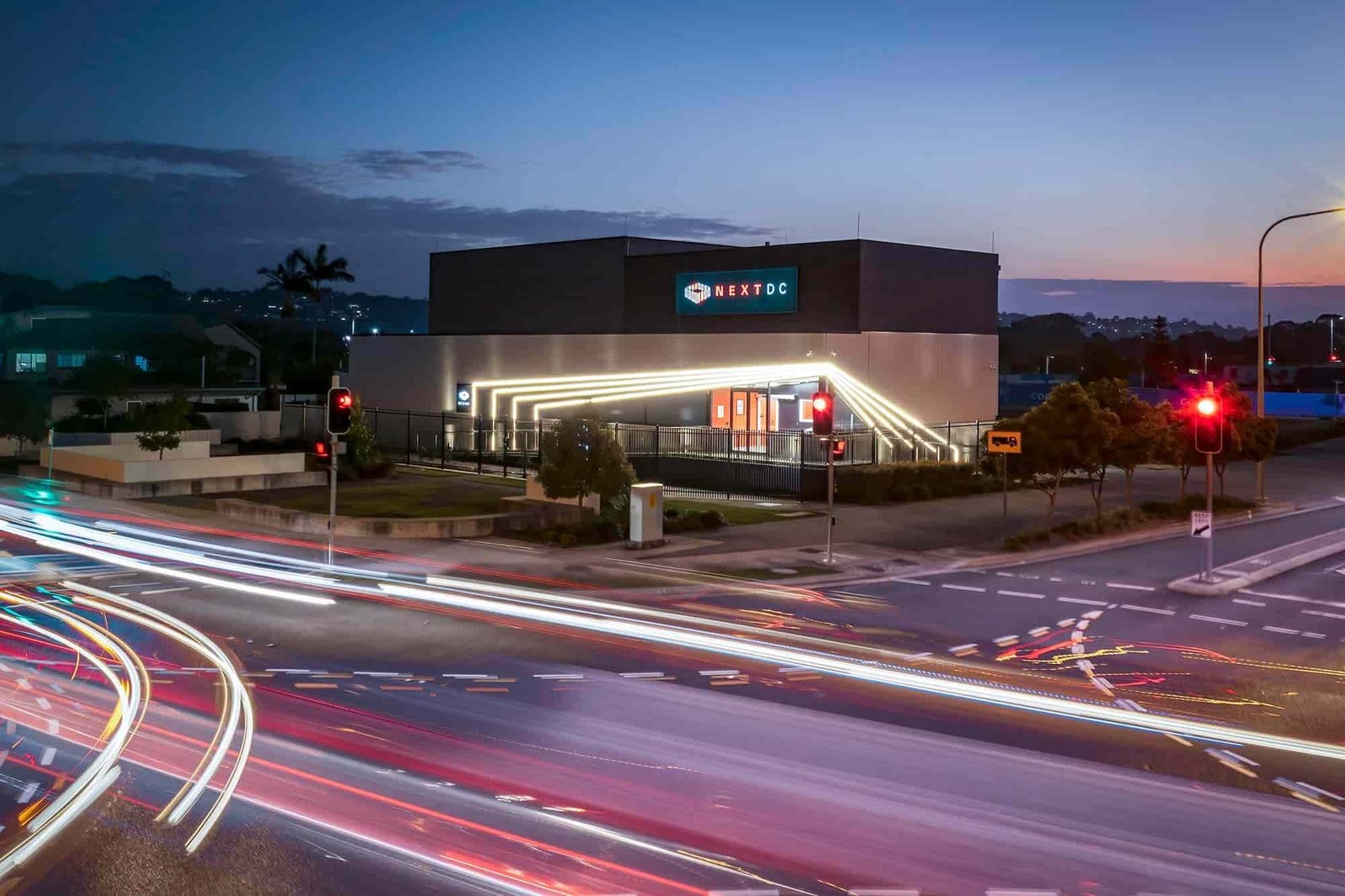
The buyers came after the close, at a single price, for just under a tenth of the company each. Two weeks earlier, that company had told the market its newest campus could not get the power it needed on schedule.
NextDC, the Australian data center operator, closed up 50.84% on November 5 after Goodman Group and Digital Realty each bought as much as 9.9% of its shares in a block trade struck after the market closed on November 4. The price was A$9.50 a share. The two buyers said they have no present intention of making a full takeover offer, and added that they reserve the right to do so.
The board described the move as opportunistic. That is a careful word. It characterizes the timing without characterizing the intent, and it declines to treat the two buyers as strategic partners arriving with a plan. A board that wanted a partner would say so. A board that has just been surprised says the purchase was opportunistic.
The timing is the part that requires explanation. Two weeks before the trade, NextDC disclosed delays in the power supply for its M3 campus in Melbourne and cut its guidance for the 2027 fiscal year. Power is the binding constraint in the data center business, and a delay in energizing a campus pushes revenue out by quarters while the interest on the construction loan keeps accruing. When a company with a large development pipeline admits that a flagship site is behind schedule, the equity gets repriced, and it gets repriced faster than the assets change.
That is the gap the buyers stepped into. The land, the buildings, the fiber, and the customer contracts did not become less valuable because a substation was late. The share price did, because the market prices the schedule as well as the asset. Buying a stake in the hours after the close, at a fixed price, is a way to acquire exposure to the portfolio while paying for the delay.
The size of the stake is not accidental. Two holdings of up to 9.9% come to as much as 19.8% of the register, just below the 20% level at which Australian takeover rules generally require a formal bid. That leaves the buyers inside the rules and outside control, with a position large enough to block a special resolution, to demand information, and to be the first call if the board ever decides to run a sale process. It is a seat at the table bought at a discount.
It is also a statement about who the natural owners of data center capacity are becoming. Goodman Group and Digital Realty both operate in the same business as NextDC, which means they compete for the same tenants, the same land, and, increasingly, the same electricity. A stake in a competitor is an unusual instrument. It gives the holder a view of the pipeline, a claim on any consolidation, and a voice in how the target prices its capacity.
For NextDC’s other shareholders, the trade cuts both ways. Two large holders with industry knowledge can be a source of support when the company needs capital or a partner for a project. They can also be a ceiling on the share price, because a bidder who already owns 19.8% of a company has less reason to pay a full premium for the rest. The stock’s 50.84% gain on the day reflects the second reading more than the first: the market marked the shares up to the level a bid might eventually reach, not to the level the fundamentals alone would support.
The statement from the buyers is standard language, and its meaning is precise. No present intention means no obligation today. The reservation of the right means the option stays open, and in Australian practice a reservation of that kind is often the first paragraph of a longer document. The board’s description of the purchase as opportunistic is the corresponding defensive move, and the next step for a board in that position is usually a review of its own value, whether or not it says so publicly.
There is an industrial logic that makes a bid plausible. Data center demand is being driven by artificial intelligence workloads, and the constraint on serving that demand is no longer capital or land but power and planning permission. Companies that already hold approved sites with secured connections are worth more than their earnings suggest, which is why buyers with balance sheets are looking at operators rather than at greenfield projects. NextDC’s Melbourne campus is exactly the kind of asset that becomes more valuable the longer the interconnection queue gets.
The counterargument is that the buyers may simply want the exposure without the operating burden. A 9.9% stake in a listed operator is liquid, requires no integration, and gives the holder a hedge against its own development risk. If that is the intent, the position can be sold as easily as it was bought, and the threat of a bid is a way to keep the board cooperative without ever having to make one.
The next signal will come from the register. A stake of this size has to be disclosed, and the disclosure will show whether the two buyers acted together or separately, and whether either has bought more since. A move above 10% by either would change the arithmetic and the regulatory conversation that follows it.
What the market has to decide is whether the power delay at M3 was a construction problem or a warning about the whole portfolio. If the connection arrives late but arrives, the buyers have purchased a pipeline at a discount created by a calendar. If the delay is the first sign that the company cannot secure the electricity its plans require, then a 50.84% gain is a repricing of an asset that may not be deliverable, and the two new shareholders will have bought their seats at the wrong table.



