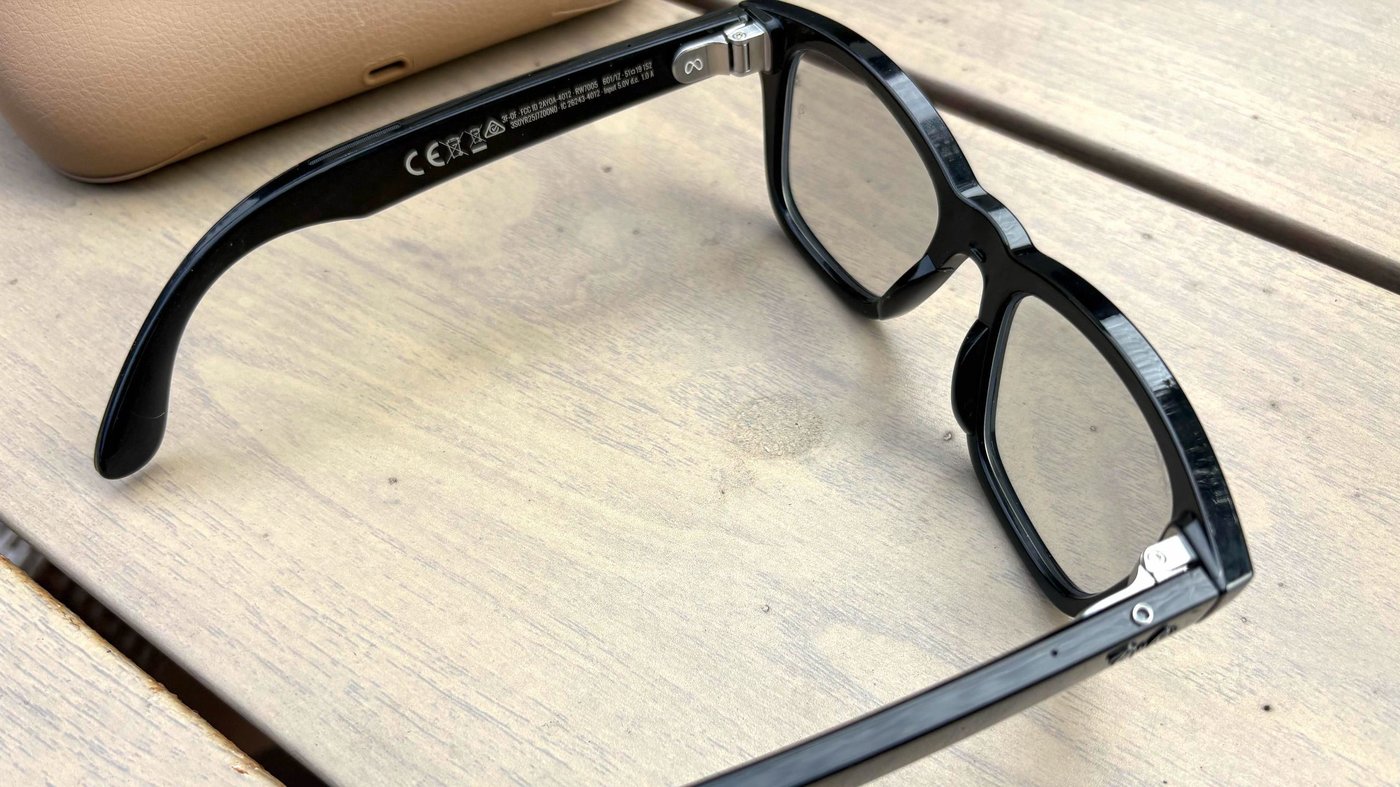
The instruction in the release notes is unusually blunt for a consumer product. If the glasses get too hot, they turn themselves off, and the wearer is told to let them cool before putting them back on.
Meta confirmed on Nov 14 that it had pushed version 130 of its software to five models of AI glasses sold under its own brand, listed as Adventurer, Fury, Starfire, Nova and Capri. The update adds a thermal protection feature: when the device detects overheating caused by water ingress or by heavy sweating, it shuts down to cool rather than continuing to run.
The company described the problem as rare and said it affects a small number of devices. It recommended the update for all users anyway, which is the standard position for a fix that is cheap to install and expensive to skip.
The engineering behind the note is less routine. A pair of smart glasses puts a battery, a mainboard, a camera, radios and speakers into two arms of plastic that rest against the side of a head. There is no fan, no vent large enough to matter, and no room to separate the components that generate heat from the ones that dislike it.
Heat has to leave through the surface, which means through the frame and into the wearer’s skin. That constraint sets a ceiling on how much computing the device can do and for how long. It also explains why the thermal limits on wearables tend to be reached during exactly the activities the product is marketed for: walking in summer, running, cooking, standing on a platform.
Water makes the problem worse in a way that is not obvious. A device rated to survive rain or a splash is sealed, and a sealed enclosure holds heat in. The better the ingress protection, the less the enclosure can breathe, and the more the design depends on spreading heat across a surface that is already close to body temperature.
The usual remedy for heat in a phone or a laptop is to slow down rather than stop. The processor runs at a lower clock, the screen dims, the device keeps working. A shutdown is what a manufacturer chooses when slowing down no longer holds the temperature, and glasses have less room for the middle option than a handset does.
Analysts said the update points at a trade-off the category has not solved: the features that make glasses useful outdoors are the ones that put them in contact with sweat and weather, and the physics of a sealed device built into a frame leaves little margin when both arrive at once. The margin has to be found in software, because the frame is already full.
Meta’s own framing is careful. A shutdown is not a recall, and the language of the note avoids the word defect. The feature is described as protection, which is accurate and also a description written with lawyers in the room.
The regulatory backdrop has shifted in the past two years. Wearables that sit against the skin are treated more seriously than phones in safety testing, and a device that becomes uncomfortably warm on someone’s temple is a different category of event from a handset that warms in a pocket. Manufacturers have learned to ship the mitigation before the complaint.
Water and heat also interact at the level of the battery. Lithium cells that are asked to discharge quickly while sealed and warm age faster than the specification suggests, and the failure modes that follow are the ones that generate warranty claims. A firmware rule that stops the device early is cheaper than a hardware revision.
For buyers, the practical consequence is small and slightly annoying. A pair of glasses that shuts down mid-walk does not lose data, and it does not need service; it needs ten minutes on a table. The cost is the interruption, and the interruption arrives when the wearer is least able to do anything about it.
The update also says something about how these products are being sold. Glasses with cameras and assistants were pitched as an accessory, worn the way sunglasses are worn, with the computing treated as incidental. Five models on one software release, each with a thermal rule, is the shape of a product line that has become a computing platform and is being maintained like one.
Meta has not said which components are producing the heat or how close the devices run to their limits in ordinary use. It has said the issue is rare. The two statements are compatible, and only one of them can be verified by a customer.
What can be verified is the behaviour. A device that turns itself off when it gets wet and warm is a device that has been designed with a thermal budget it cannot exceed, and a company that ships the rule to every user is a company that expects the budget to be tested. The glasses will keep working. They will simply stop, occasionally, at the moment their owner wanted them most.