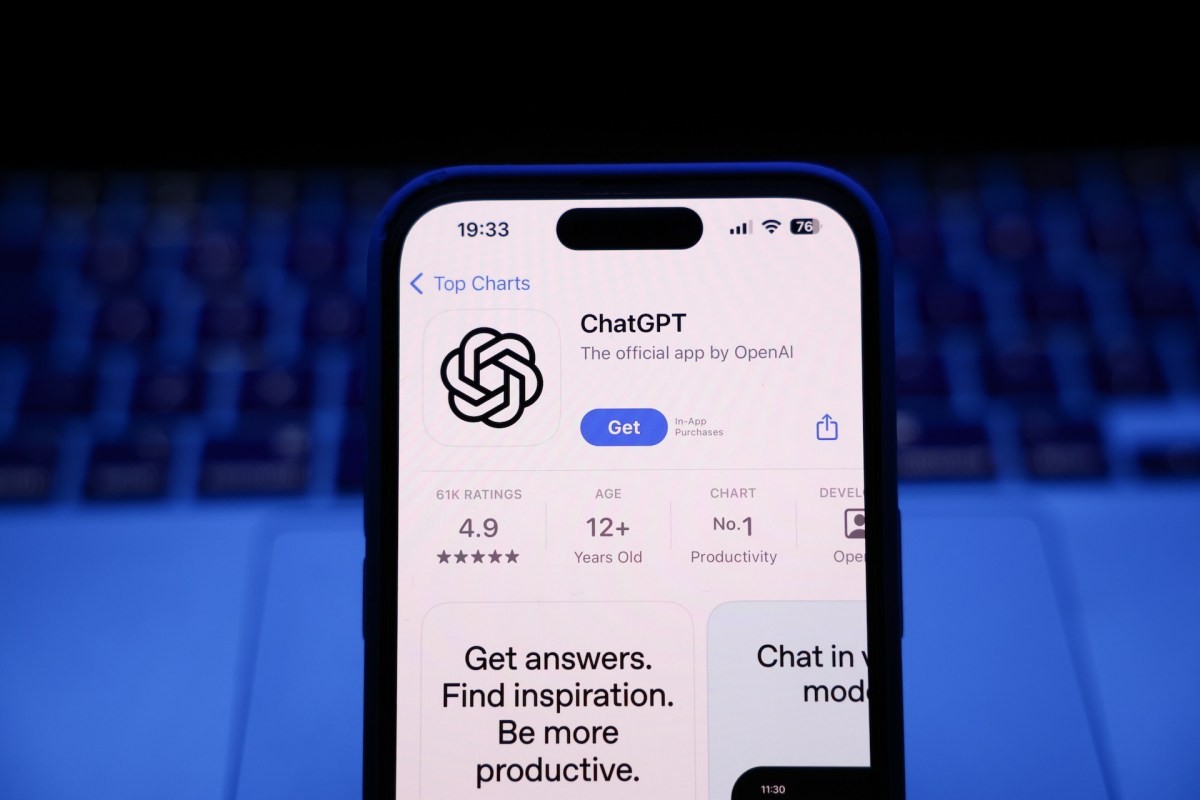
SAN FRANCISCO—The free tier of the most popular AI product on earth is about to get bigger. OpenAI said on Aug. 6 that it is updating its ChatGPT experience, giving free users unlimited text-based chat and making GPT-5.6 Luna the default model for the service’s free tier. Paid subscribers get an upgraded version of GPT-5.6 Sol, the company’s flagship model, which OpenAI said is more accurate, better focused and more consistent across different kinds of tasks. The company also added a “Think” button for free users, letting them tap into deeper reasoning for harder questions.
The move comes just as ChatGPT crossed a threshold that seemed implausible when it launched in November 2022: a billion weekly active users. OpenAI announced the figure last month, making ChatGPT the fastest-growing consumer application in the history of the internet by some distance. The product went from curiosity to utility in less than four years, riding a wave of viral moments, corporate adoption and the deepening integration of AI into everyday work. The update announced this week is, in effect, OpenAI’s answer to its own success: how to keep a billion users coming back while finding ways to charge them.
The strategy is explicit in the details. Unlimited text chat for free users removes the last friction point for people who use ChatGPT casually, the meters and caps that once made the free tier feel like a demo rather than a product. The “Think” button, meanwhile, gives free users a taste of the reasoning that powers the paid models, a feature designed to be good enough to want more of. OpenAI’s business model has always been a funnel: free access at the top, Plus and Pro subscriptions in the middle, enterprise deals at the bottom. The company is widening the top of the funnel and betting that the upgraded Sol will be compelling enough to pull users down it.
The model update itself is aimed at the complaints that have dogged every frontier model: confidence without accuracy, answers that drift off the question, and behavior that changes depending on how a request is phrased. OpenAI said GPT-5.6 Sol now adjusts the depth of its responses to the complexity of the question and cuts back on unnecessary formatting, a quiet fix for the boilerplate that has become a hallmark of AI writing. For Plus and Pro subscribers, the changes are incremental improvements on a product they already use; for OpenAI, they are the quarterly rhythm of staying ahead of rivals who are spending as much as the company itself to catch up.
The competitive context is unforgiving. Google has pushed Gemini aggressively into its own billion-user products, Anthropic has built a following among developers and enterprises with Claude, and Meta is giving away its models at effectively zero cost. The pricing war has intensified across the industry, with several companies cutting subscription prices this year. OpenAI’s response has been to lean on distribution—the sheer number of people who already use ChatGPT—and on the perception that its models remain a step ahead. The Aug. 6 update is part of that defense: keep the free product good enough that switching costs feel real, and keep the paid product good enough that the subscription is an easy yes.
The numbers behind the strategy are daunting in both directions. Serving a billion weekly users is an enormous compute bill, and OpenAI has spent billions on capacity to keep response times acceptable. The company has made clear it expects the economics to improve as models become more efficient, but the near-term cost of giving away unlimited text is real. At the same time, the company’s revenue has grown quickly, and its enterprise business has become the engine of that growth, with major corporations standardizing on ChatGPT for internal use. The free tier is the marketing department for that engine, and OpenAI is investing in it accordingly.
There is also a defensive element to the timing. The AI market is entering a phase where default settings matter: most users never change the model dropdown, and the model they get by default shapes their experience of a product. OpenAI’s decision to make Luna the free default, and to keep improving the paid Sol, is a fight for the default position in the world’s largest AI audience. Competitors are doing the same thing, and the battle over defaults is arguably the most important consumer market in technology right now.
For the broader industry, the update is a reminder of how the AI consumer market has matured in less than four years. The first ChatGPT had no free tier to speak of, no reasoning button and no business model beyond curiosity. The product that a billion people use today is a different artifact: a utility with tiers, features and a pricing funnel, wrapped around the same core of statistical prediction that made the original a sensation. The transition from wonder to utility is the story of every great consumer technology, and OpenAI is writing it at a faster pace than anyone has before.
What the company does next will determine whether the funnel works. The enterprise business is where the money is, and OpenAI has signaled that the next wave of product investment will be aimed at companies building AI into their workflows. The consumer tier serves that business by keeping ChatGPT culturally dominant, and the Aug. 6 update keeps that dominance intact. Whether the free users of today become the paying customers of tomorrow is a question OpenAI can only answer with data it already has. For now, the company is doing what it does best: making the product everyone already uses slightly better, and slightly harder to leave.