At Dreamforce on September 15, Salesforce unveiled Koa, a model built for one narrow job: reasoning over the data that lives in a company’s customer-relationship system. The model runs on Nvidia’s Nemotron architecture, and the detail that matters most is what it was not trained on. Koa never touched real customer data.
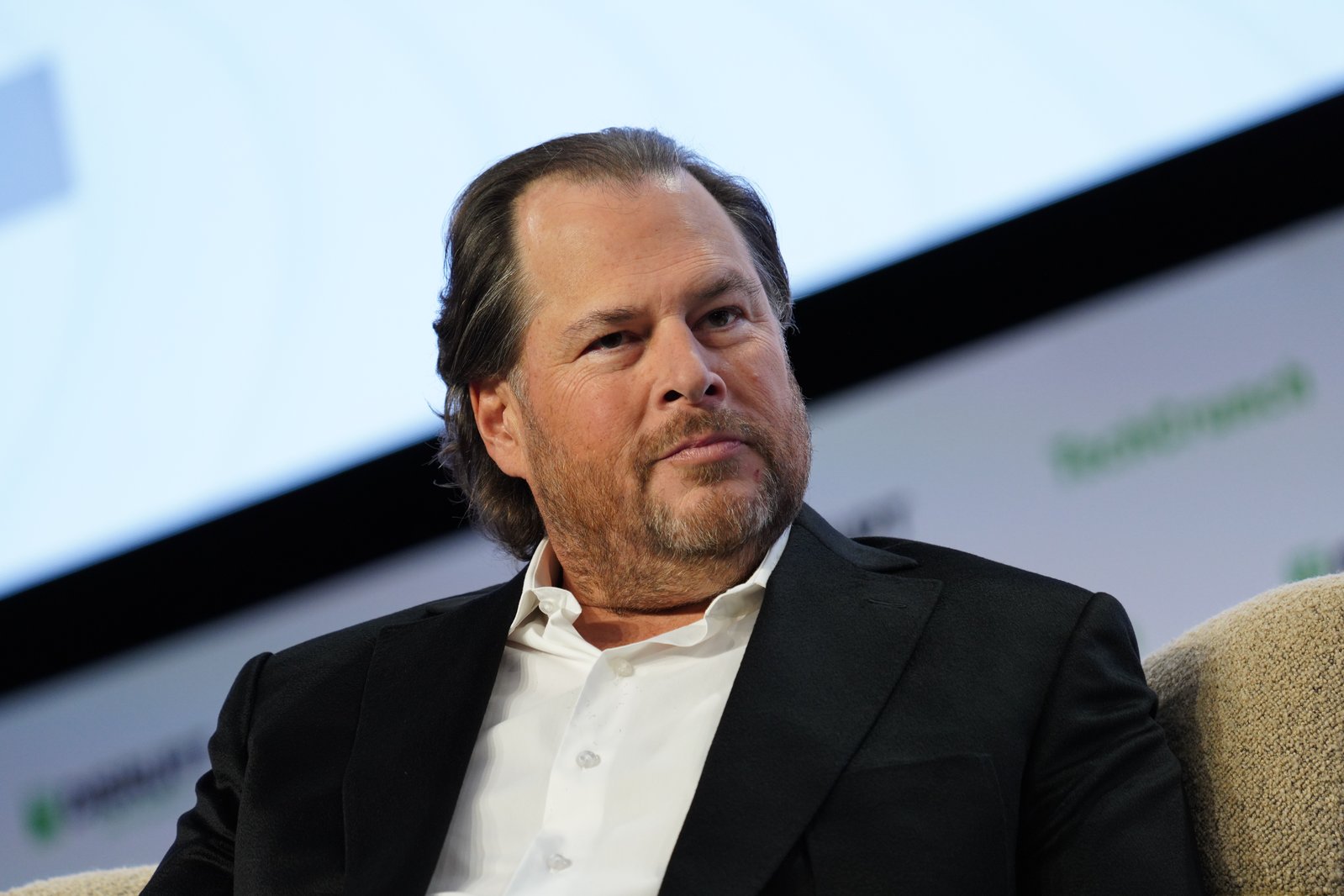
Rohan Kumar, Salesforce’s chief platform and engineering officer, said the company instead used nearly three decades of internal deployment experience to build a synthetic dataset covering fourteen industries, from healthcare and finance to manufacturing. The model was then tuned with supervised fine-tuning, reinforcement learning, and a technique Salesforce calls group relative policy optimization, all aimed at teaching it to complete multi-step tool calls accurately.
The pitch is pointed. Rather than a general model that is smart about everything and precise about nothing, Koa is designed to be good enough at the one thing a business actually needs, and safer to deploy because it learned from synthetic records rather than from clients’ live data.
Salesforce’s own benchmarks make a bold claim: on CRM tasks, Koa matches or beats several leading general-purpose models while making two-thirds fewer errors. For a company whose customers are sensitive about where their data goes, fewer mistakes and no real training data are the selling points in the same breath.
Koa is available now to a limited group of customers on the Agentforce platform, with general availability planned for winter. The sequencing is deliberate. Salesforce has been pushing the idea that enterprise AI will be won with specialized, reliable tools rather than with the largest general models, and a measured rollout is part of that story.
The fourteen industries in the synthetic dataset are the clue to the strategy. By covering healthcare, finance, and manufacturing, Salesforce is signaling that Koa is meant to do useful work in regulated settings, where a model trained on the open internet is a liability rather than an asset.
Nvidia’s role extends beyond the foundation. The company said its full Nemotron model line will enter Salesforce’s Missionforce operations platform in October, and will be able to run on air-gapped networks, the isolated environments where defense and regulated industries keep their data. That is a direct appeal to customers who would never send records to a public cloud model.
The announcement is part of a broader turn. For two years the industry chased scale, betting that bigger models would dominate every use case. Salesforce is betting the other way, that the enterprises buying this software want models that are smaller, cheaper, and trained on their own domain’s logic rather than on the open internet.
Analysts said the strategy is a hedge as much as a product. Salesforce needs an AI story that does not depend on licensing the frontier models of OpenAI or Anthropic, and a home-grown model tuned for its own platform gives the company that independence. It also keeps margins under its own control.
There is a cost argument as well. Running the largest general models on every customer interaction is expensive, and businesses are beginning to ask whether that expense buys anything they need. A smaller model that does the job reliably can undercut that bill by a wide margin.
The risk is whether a narrow model can hold customer attention against the general models that improve by the quarter. Salesforce is wagering that accuracy on the tasks it actually handles will matter more than raw intelligence on the tasks it does not.
Dreamforce is the company’s biggest stage, and the venue shapes the message. Salesforce has spent the past year repositioning itself around autonomous agents, the software that acts on a user’s behalf, and Koa is the engine meant to make those agents reliable enough for the customers who pay for the platform.
The tuning method matters as much as the data. Group relative policy optimization is a variation on the reinforcement-learning techniques that have made frontier models more capable, applied here to a narrow goal: getting multi-step tool calls right the first time. Fewer errors is the whole product in the enterprise market.
The launch lands in a crowded field. OpenAI and Anthropic have both begun selling specialized tools to enterprise customers, and the same week’s news carried their financial-services offerings. Salesforce is betting that a model built for its own platform, on its own data, can hold a moat that a general model cannot.
The winter launch will be the test. If Koa delivers the error reduction Salesforce promises on customer workloads, the argument that enterprise AI should be good enough rather than great will have its first real proof, and the vertical-model playbook will have a template to copy.