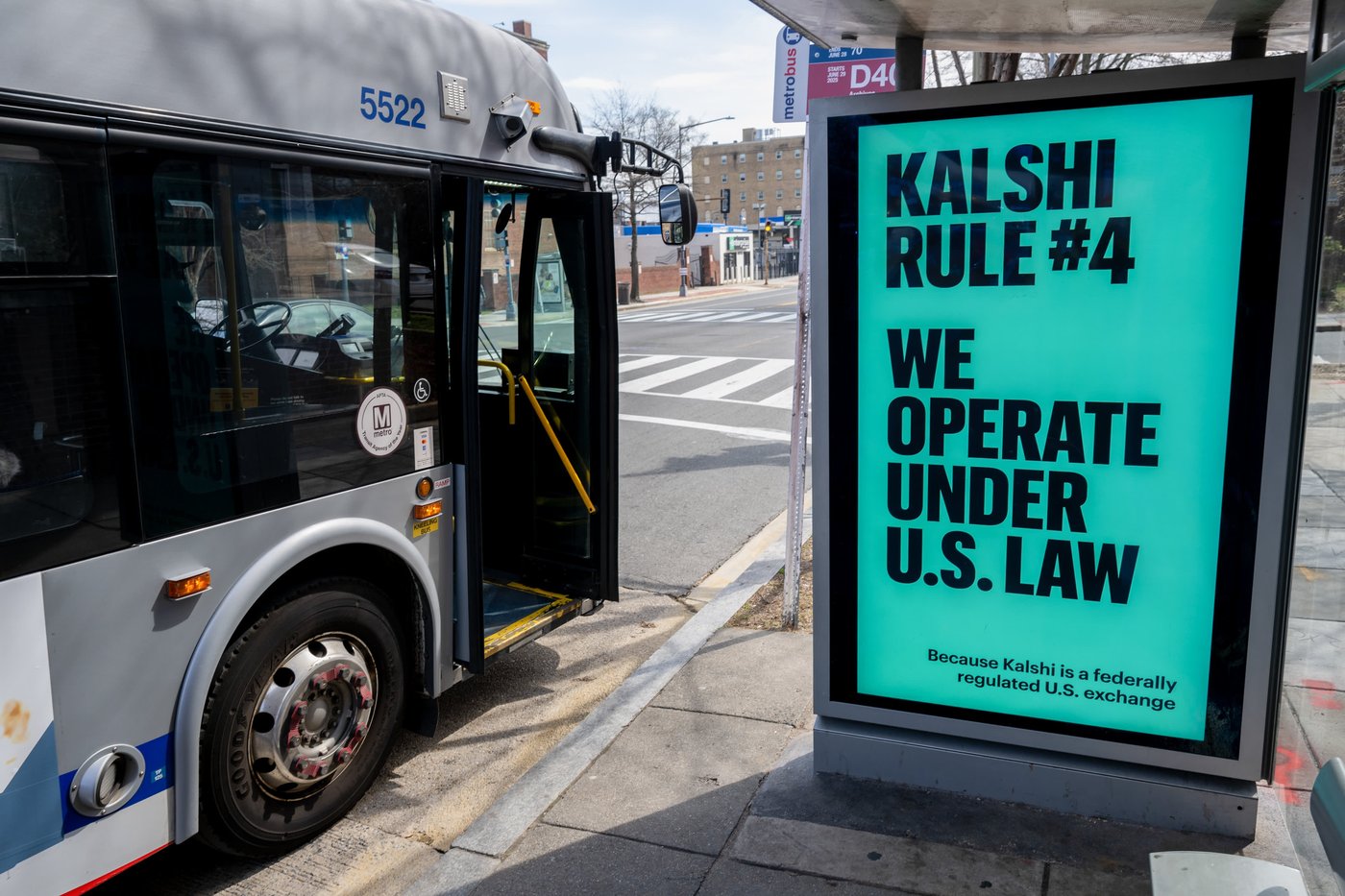
The ruling arrived in two parts, and Kalshi lost both of them. A panel of the U.S. Court of Appeals for the Sixth Circuit held on September 25 that the prediction market’s sports contracts are not swaps under federal law, so they fall outside the exclusive jurisdiction of the Commodity Futures Trading Commission. State gambling statutes, the court said, can reach them.
The panel added a second conclusion that matters as much as the first. Even if the contracts qualified as swaps, the Commodity Exchange Act would not displace gambling law in Ohio and Tennessee. Either way, the states win.
The decision upheld an Ohio district court’s refusal to grant a preliminary injunction and vacated a preliminary injunction issued in Tennessee, sending that case back for further proceedings. Kalshi has argued throughout that its contracts are financial instruments regulated at the federal level, not wagers subject to fifty different rulebooks.
The industry has now lost twice in the circuits this year. In August, the Ninth Circuit found that Nevada could regulate contracts of this kind. In April, the Third Circuit went the other way, holding that the CFTC has exclusive jurisdiction over all swaps. New Jersey asked the Supreme Court to intervene in early September, citing the disagreement among the circuits.
That split is the central fact of the dispute. When appellate courts reach opposite conclusions on the same federal statute, companies operating nationally face compliance obligations that vary by where their customers live. For a prediction market, that means geo-blocking, licensing in some states, and litigation in others.
The Tennessee attorney general, Jonathan Skrmetti, said Kalshi had tried to circumvent Tennessee law and failed. The company responded that a patchwork of state regimes cannot work for a market that operates on the internet, where a trader’s location is a matter of billing address rather than physical presence.
Regulators have been moving at different speeds. The CFTC under its current leadership has taken a permissive stance toward event contracts, treating them as derivatives within its remit. State gaming commissions see the same products as unlicensed sports betting and have sued accordingly, arguing that a federal agency cannot authorize what state law prohibits.
The commercial stakes explain the intensity. Sports contracts generate most of the volume on prediction markets during football season, and they carry far lower margins than the election and economic markets that built these platforms’ reputations. Without sports, the business case for several of these companies narrows considerably.
The court’s reasoning also narrows the agency’s role in an area it had been expanding. The CFTC has approved event contracts through a certification process that lets products trade unless the commission affirmatively blocks them, and it has defended that approach in court. A holding that sports contracts are not swaps at all removes the premise on which much of that defense rested.
Legal scholars have pointed out that the Sixth Circuit’s reasoning leaves Kalshi a path even in defeat. If the contracts are not swaps, the company could seek licensing under state gaming frameworks, as sportsbooks do. That route is expensive, slow and varies by state, and it would put Kalshi in the position of becoming the kind of business it has spent years arguing it is not.
The alternative is to keep litigating. A petition for rehearing en banc would put the question to the full Sixth Circuit, and a cert petition would put it to the Supreme Court, which has shown willingness to take cases where circuits disagree on the scope of federal preemption.
Timing works against the company on that path. Appellate review takes months, and every month of uncertainty makes it harder to sign partnership agreements with exchanges, clearing firms and sports leagues that want to know which regulator they are dealing with.
Analysts said the practical effect is that prediction markets will operate as a state-by-state business for the foreseeable future regardless of how the Supreme Court rules. The compliance cost of that outcome falls hardest on smaller platforms, which cannot afford the licensing and legal budgets that a national operator can.
The company has also built a business around regulated status, marketing itself as a venue where participants trade economic outcomes rather than place bets. A ruling that its most popular contracts fall under state gambling law complicates that distinction, and the platforms that compete with it are watching closely because the same reasoning would apply to them.
What remains open is whether the Supreme Court takes the New Jersey petition, and whether the Justices see the question as one of statutory interpretation or as a referendum on how far a federal agency can go in authorizing products that states have criminalized. The court has not said.