The invitation Apple sent on Oct. 19 gave away less than its tagline. “Pro and tell,” it read, for an experience in Los Angeles at 10 a.m. Pacific on Wednesday. Anyone who had followed the supply chain over the summer read it as a joke about the Pro lineup and a promise about the one thing Apple spent fifteen years saying it would not build: a Mac with a touchscreen.
People familiar with the plans say the company will announce 14-inch and 16-inch MacBook Pro models with touch-enabled OLED displays, according to Bloomberg’s Mark Gurman. The chassis will look much like the current generation but weigh less, and the notch at the top of the screen gives way to a Dynamic Island. The machines will run the M5 Pro and M5 Max chips that shipped in March, not a new generation. Prices will rise well above the $2,499 and $2,999 that the current mini-LED models start at in the United States, with increases of as much as $500 at the top of the range.
The software does more of the work than the panel. macOS Golden Gate introduces what Apple has described internally as a dynamic interface, one that changes depending on how the machine is being used. “The system will take previous interactions into account, presenting controls based on whether someone has been touching the display or using the trackpad,” Gurman wrote in his Power On newsletter. “Touching a button can also bring up a menu around the user’s finger, while the Dock and Menu Bar have been optimized for touch.”
Apple intends to present touch as one more way in, alongside the keyboard and trackpad, rather than a redefinition of the device. That framing is necessary. For years the company argued that reaching up to a vertical screen was tiring, that fingerprints on a laptop display were a defect rather than a feature, and that the iPad existed for anyone who wanted to touch their work. A touch MacBook does not retract those arguments so much as route around them, and the marketing will need to make the distinction feel deliberate rather than late.
The existing mini-LED MacBook Pros will remain on sale for now, according to Gurman, and will eventually be discontinued. Apple is also expected to show an M6 version of the entry-level 14-inch MacBook Pro and a new iMac at the same event.
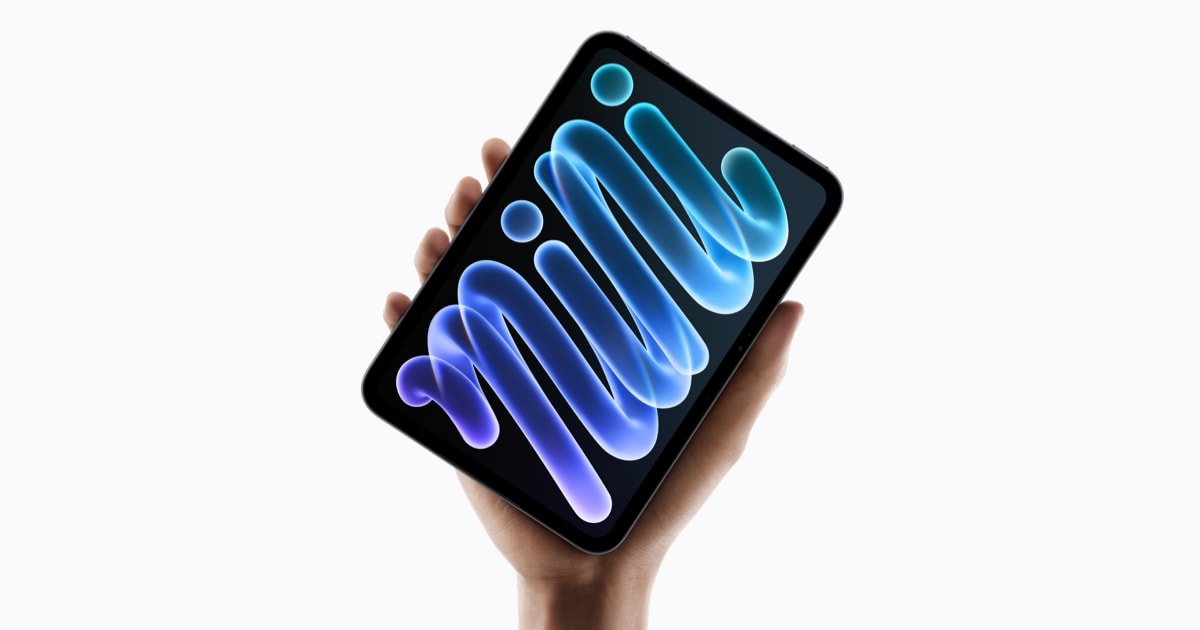
The iPad mini that Apple announced on Monday shows the other half of the company’s pricing strategy. The eighth-generation mini is the first with an OLED display, at 8.5 inches, and the first with the A20 Pro chip. It measures 5.4 millimeters thick, weighs 0.56 pounds, carries an IP67 rating for dust and water, and moves the front camera to the long edge of the device, adds an Acoustic Display speaker system, Apple’s N1 wireless chip and, on cellular models, the C2 modem. It starts at $699 for 128 gigabytes.
That is $100, or 17%, more than the $599 the previous model cost. It is also the second increase this year. The mini held at $499 through 2024 even as Apple doubled base storage to 128 gigabytes. In June the company raised prices across much of its line, citing shortages of memory and chips, and the mini moved to $599. The new model keeps the same storage and adds $100 on top, which customers are being asked to read as the cost of the panel rather than the cost of the memory inside it. Cellular models climb from $749 to $849, education pricing starts at $649, and the new TechWoven Smart Folio costs $79, up from $59.
The color range has narrowed from four finishes to two, Midnight and Starlight. Pre-orders open Wednesday, the day of the Los Angeles event, and devices arrive Nov. 6. Buyers of the 512-gigabyte model get a fuller version of the A20 Pro than buyers of the base configuration.
Both products sit on the same pressure point. Component costs have risen for two years, driven by memory prices and by the advanced displays Apple now wants across its lineup. The mini’s $100 increase, arriving less than six months after the last one, is the clearest sign yet that Apple no longer intends to absorb those costs.
The strategic bet on the MacBook is different. Apple’s personal computer business has grown slowly for a decade, and the average selling price has been the main lever available. A touchscreen OLED model at a higher price raises that average without requiring the company to chase volume in a market where it already sells most of the profitable units. If the machine sells, Apple gets a new premium tier and a reason for creative professionals to replace hardware they bought in 2023. If it does not, the company has muddied the boundary between the Mac and the iPad at the moment it is trying to sell both.
There is a competitive argument too. Windows laptop makers have shipped touchscreens for more than a decade, and the best of them convert into tablets. Apple has ceded that demo to them, arguing that the software never justified the hardware. Golden Gate is an attempt to make the software justify it, and the Dynamic Island is a visible marker that this is a new generation rather than a spec bump.
The interesting question is not whether a touchscreen MacBook Pro is good. It is whether a company that spent years describing touch on a laptop as a compromise can now charge a premium for it without appearing to admit that the earlier position was a marketing convenience.
The iPad mini answers part of that question already. Customers who want the newest display technology will pay $100 more than they did in June, and Apple is betting they will. Wednesday will show whether the same holds for a laptop that finally does what the company said it should not.