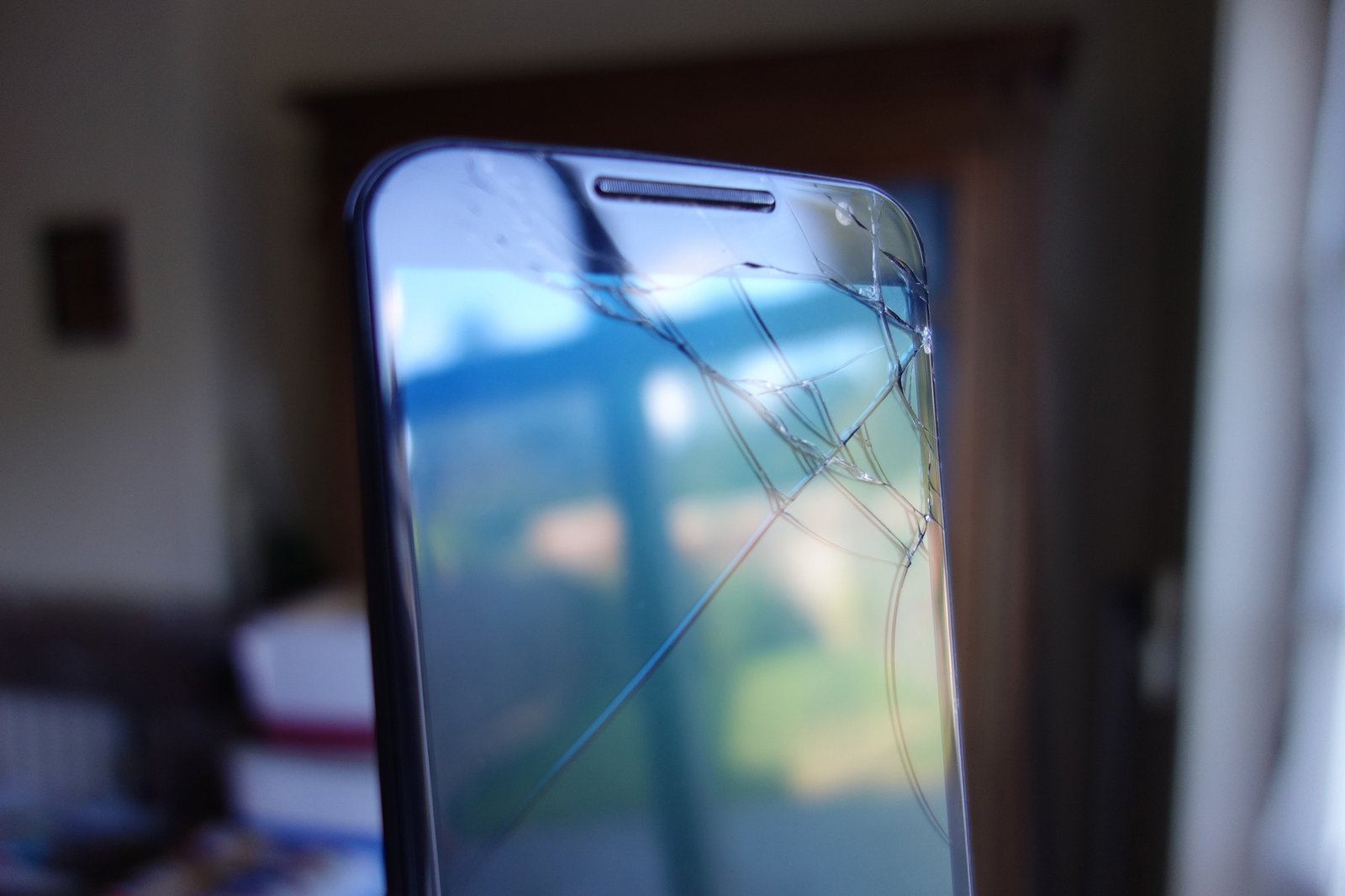
The owner had used his iPhone Duo for about six hours and opened it fewer than twenty times. He was showing the phone to a friend when he felt something give beneath the inner screen, near the hinge. He kept opening it. There was an audible crack, and a bright line appeared down the fold.
That account, posted to Reddit on launch weekend and repeated across the MacRumors forums, has become the defining image of Apple’s entry into foldables. Since the first units reached customers, owners in several countries have reported vertical cracks and bands of dead or bright pixels along the hinge, some within hours of unboxing. A handful of Apple Store demo units in China, where the phone went on sale hours ahead of the United States, show the same damage.
The pattern is consistent enough to suggest a common cause. Almost all of the failures appear at the fold itself, usually as a thin vertical line down the center paired with a thicker horizontal line across the right half of the display. Some owners say the phone was flawless beforehand, with no marks on the inner screen or the outer hinge to suggest debris had been caught.
Apple has not issued a statement or announced a repair program. It has published a support document, titled iPhone Duo Troubleshooting Hinge Issues, that walks owners through a sequence: check whether a case or cover is interfering with the hinge, inspect for dust or grit, and then have the display assembly replaced. The document notes that there is no software fix for a hinge problem, which is the sort of sentence that appears in Apple’s guidance only when the company expects volume.
Retail handling has been uneven. Most owners who brought a cracked phone to a store walked out with a replacement the same day. Others were told the damage was accidental and quoted $999 for an out-of-warranty inner display, a figure that would make most owners think about replacing the phone instead of repairing it. Two such cases, in Shanghai and in Jacksonville, Florida, circulated widely on social media this week, and they matter more than the repair bill itself, because a warranty decision that varies by store undermines the confidence Apple needs from buyers of a first-generation product.
The phones that failed are reportedly being sent to engineering teams in California for analysis.
Independent teardowns have narrowed the suspects. iFixit built a three-dimensional model of the hinge and compared it against photographs of the broken displays. Its conclusion was specific: the fractures cluster near the transition from the gap that carries the display’s flex cable to the central hinge support, slightly below the point where the cable passes through. That is a place where several edges meet and change how the thin display is supported as it bends, and where a hinge that binds, or a particle that lodges, would concentrate stress on glass that is thinner than a human hair.
Particles are a plausible mechanism. iFixit reported that grit can infiltrate the hinge and produce a crunching sensation, and the owner accounts describe exactly that kind of resistance just before the crack. Apple’s own support steps, which begin with dust, point the same way.
The category has seen this before, which is part of the problem. Samsung’s first Galaxy Fold was pulled from reviewers in 2019 after debris entered the hinge through gaps in the display protector, and the company delayed the launch for months while it sealed the mechanism. Every foldable shipped since has been judged partly on whether its hinge is sealed well enough to survive a pocket. Foldables now account for a small but growing share of premium phone sales, and the display repair costs that come with them have become a standard part of the ownership calculation.
What makes Apple’s situation harder is the price of admission. The Duo is the company’s most expensive phone, and it arrived after years of internal debate about whether the technology was ready. Review units sent to journalists ahead of launch did not show the fault, which suggests a manufacturing batch rather than a design flaw, and that distinction will decide how Apple responds. A batch problem can be quarantined: stop shipping from the affected lot, replace units in the field, keep the line running. A design problem in the hinge geometry cannot, and would force a change to tooling that takes months to reach volume.
The commercial stakes are asymmetric. Apple sold through its initial allocation quickly, and demand for a first foldable is front-loaded into the enthusiasts who are also the most vocal when something breaks. Returns are accepted for two weeks, and hinge failures from normal use fall under the one-year warranty, so the near-term cost is measured in replacement units rather than reputation alone. The longer-term cost is in the second generation, where buyers will ask whether the hinge was fixed and whether the repair price came down.
There are three levers available. Apple can extend warranty coverage quietly, as it has done for keyboards and for some display issues in the past. It can slow shipments from the affected production lot while engineering finishes its review. And it can revise the hinge in a running change, which is the option every phone maker takes and no phone maker announces.
What it cannot do is argue that the failures are rare without saying how many units it has shipped, and it will not say that. In the meantime, owners are doing what owners do: opening their phones more carefully, filming the process, and posting the results. For a product whose entire premise is that a screen can be folded thousands of times without complaint, that is the worst possible audience to have.