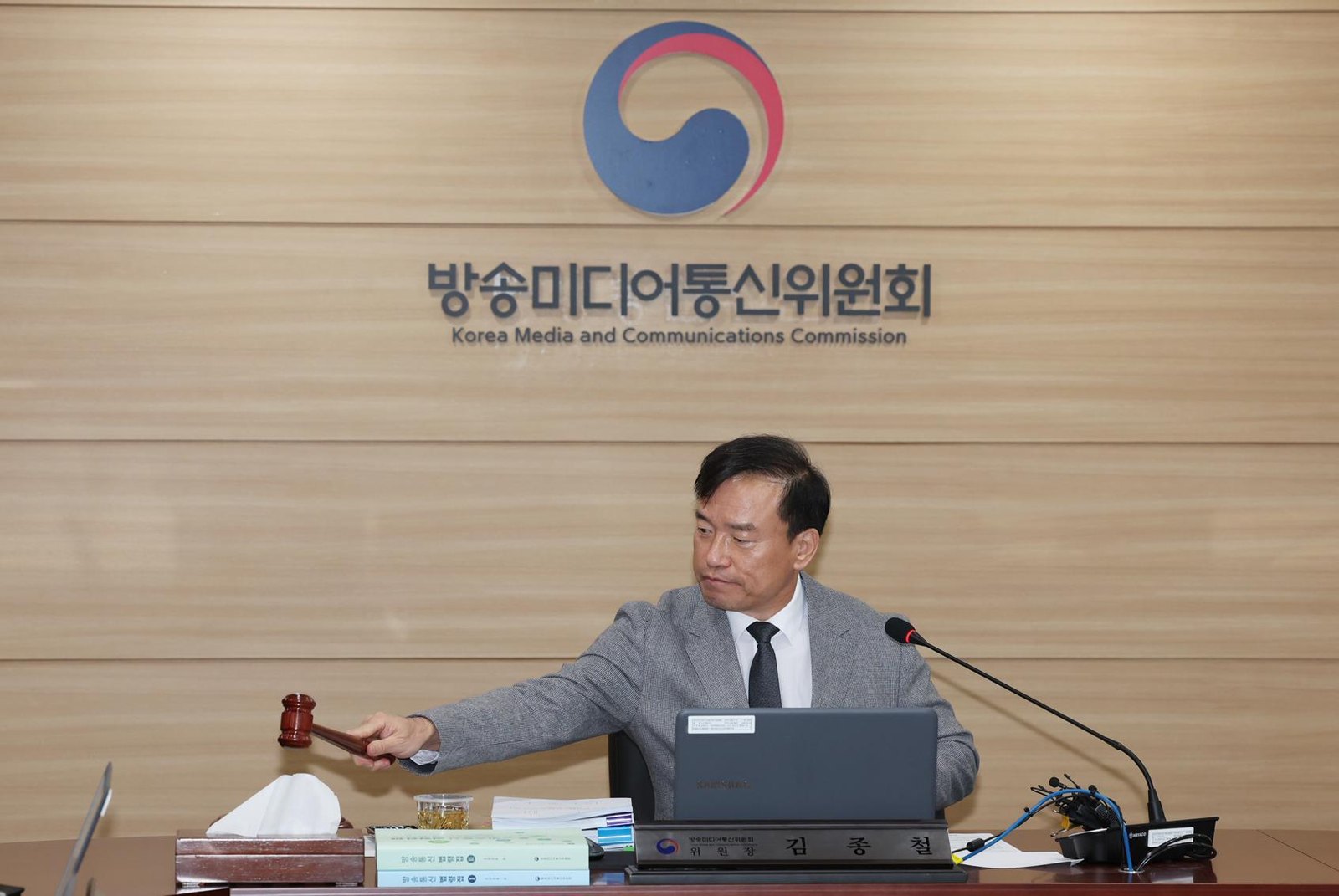
South Korea’s communications regulator approved fines totaling 63.7 billion won, about $45 million, against Google and Apple on Tuesday, finding that the two companies abused their dominance of mobile app stores by forcing developers to use their payment systems.
The Korea Communications Commission set Google’s share at 42.9 billion won and Apple’s at 20.81 billion won. Both companies were also ordered to correct the practices at issue. The regulator did not refer either company for criminal prosecution.
The case turns on a narrow question with a wide reach. When a developer sells a subscription inside an app, the platform takes a commission on the transaction, and until recently the platform also decided how the payment had to be processed. Korea’s 2021 amendment to the Telecommunications Business Act barred app stores from requiring developers to use a specific payment method, which made the country the first to legislate against the practice.
The regulator’s finding is that the requirement survived the law in substance. Developers were permitted to offer alternatives, but the conditions attached to those alternatives were unfavorable enough that few took them up, according to the commission’s reading of the market. The gap between what the statute said and what the stores did is where the fine comes from.
That distinction matters to every regulator watching. A rule that says an alternative must exist is easy to satisfy on paper: publish a policy, add a link, allow an outside checkout in a submenu that most users never open. A rule that says the alternative must be genuinely usable requires an assessment of pricing, of interface design, and of what happens to developers who choose the wrong option.
Korea spent roughly three years on that assessment. The commission issued its first violation notice in October 2023, and the file has been open since. During that period both companies changed their policies in multiple markets, partly in response to litigation elsewhere and partly in response to the Korean proceeding.
The amounts are modest against the revenue at stake. Google’s app store business generates far more in a quarter than the fine imposed on it, and Apple’s share is smaller still. Platforms have generally treated compliance costs of this size as a cost of doing business, and the more consequential part of the decision may be the corrective order rather than the money.
Still, the direction is clear. Korea built the legal instrument first and is now defining what it means in practice, and other jurisdictions have been watching to see whether the statute produces anything an enforcement agency can use. A finding of abuse, with a specific remedy attached, gives those regulators a template they did not have before.
The companies have defended their arrangements on grounds of security and user protection. Payment processing inside an app store, they argue, is what allows them to screen for fraud and to refund purchases when something goes wrong. Regulators have generally accepted that security is a legitimate interest while rejecting the proposition that it requires a single payment processor.
The practical effect on developers in Korea is likely to be felt slowly. A corrective order changes the terms of a contract; it does not change the installed base, the discovery algorithm or the fact that most users pay through whatever button appears first. Developers who have tried outside checkout in other markets report conversion rates that fall sharply once a user leaves the app.
That is why the remedy is harder to design than the fine. A regulator can require that an alternative be offered. It cannot easily require that the alternative work as well, and the difference between the two is most of the commercial value.
Smaller developers have the most at stake and the least bargaining power in the negotiation. A studio with one successful game pays the commission out of revenue it cannot replace, and a studio that publicly challenges the terms risks its placement in the store. The Korean case was built partly on complaints from that group, which is typical of app store proceedings elsewhere.
For Apple, the Korean decision adds to a set of national rulings that have arrived in sequence rather than together. Each one addresses the same conduct under a different statute, and each produces a remedy that applies only inside the country that ordered it. The result is a patchwork that platforms manage by market, with different payment rules in different storefronts.
For Google, the fine arrives while the company is also negotiating the terms of its wider distribution agreements with device makers and carriers, which regulators in several countries have examined for the same reason. The Korean finding does not bind those cases, but it does add a documented conclusion that the company’s payment requirements crossed a legal line.
The commission said it would monitor compliance with the corrective orders. Neither company indicated whether it would appeal, and both have the right to challenge the decision in court, which in past Korean cases has added a year or more before a penalty is final.
The larger question is whether the fine changes behavior or merely prices it. A platform that pays 42.9 billion won and keeps the arrangement intact has learned that the penalty is a fee. A platform that restructures its checkout flow has learned something else. Which one happened here will be visible in the next round of developer complaints, and in whether the commission opens a second file on the same conduct.