
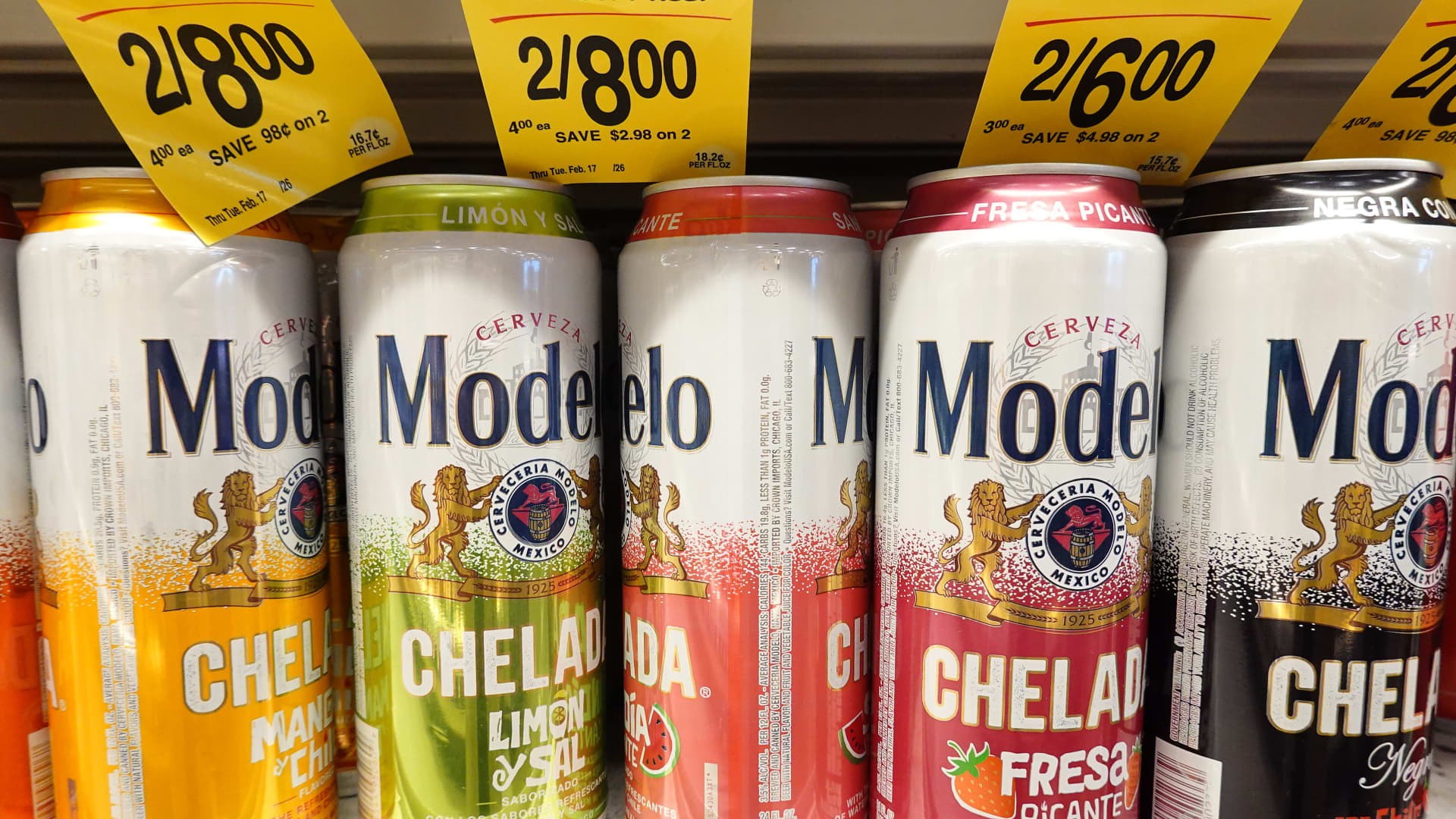
Constellation Brands closed fiscal 2026 with $9.14 billion in net sales, and its beer business grew 4% to $4.76 billion in the first half of fiscal 2027. Modelo is the best-selling beer in American retail, and the company’s growth has narrowed to the brands it imports from Mexico.
The shape of the company was set by acquisition. Founded in 1945, Constellation bought its way into wine, spirits and then beer, and the portfolio it assembled still holds Corona, Modelo, Robert Mondavi and The Prisoner under one roof.
The past several years have been spent undoing part of that. Management sold mainstream wine labels and craft breweries with thin margins, and pointed what remained at high-end beer and ultra-premium wine and spirits, where a bottle earns more per inch of shelf.
Beer is where the money is now. The Mexican brands are brewed in Mexico and shipped north, which means Constellation does not carry American brewing capacity, does not bargain with American labor, and does carry exposure to the border, to freight rates and to the peso.
Distribution runs through the three-tier system. Constellation sells to wholesalers, wholesalers sell to retailers, and the company reads its own health from retail scanner data rather than from shipments alone. Shipments can flatter a quarter. The scanner data cannot.
Modelo’s climb is the single fact that explains the mix. The brand passed its nearest American competitor in retail dollars in 2023, when a boycott pulled drinkers away from a larger rival, and it has held the top spot since. Constellation has spent the years after widening distribution rather than launching replacements.
Corona and Modelo do different jobs on the shelf. Corona sells on a clear bottle and a beach, at a price that has barely moved in a decade. Modelo sells a full-flavored lager priced between domestic premium and craft, which is the fastest-growing band in the category, and it is the one carrying the company.
Wine is the other column, and it has been shrinking for reasons that sit outside any single company’s control. Younger drinkers buy less wine than their parents did, moderation has moved from a trend into a habit, and the low end of the category has lost the casual bottle that used to supply volume.
Constellation’s answer has been to keep only the labels that can hold a premium. Robert Mondavi sits at the top of the California hierarchy and The Prisoner is a brand built on design as much as on grape. Both sell at prices where a distributor will still compete for an allocation.
The arithmetic of that strategy shows up in the half-year numbers. Beer grew 4% while the rest of the portfolio did not, which means the consolidated growth rate is now set by one category, and the quarterly story is written or lost inside it.
Concentration is the cost of the cleanup. A company leaning on a single brand for growth is exposed to that brand’s first bad year, and Modelo’s price point is where consumers trade down first when household budgets tighten.
The import model carries risks of its own. Cross-border logistics, currency and any change in tariff treatment land directly in cost of goods, and unlike a domestic brewer Constellation cannot shift production to absorb them. It can raise price or it can take the hit.
Competition has not stood still. Larger brewers have pushed their own premium and imported labels into the same shelf space, and the seltzer and ready-to-drink categories that once looked like the future have flattened, taking their shelf allocation with them.
Beer at these prices carries a higher gross margin than mainstream wine, because the brand does the pricing work rather than the grape. That gap is why the divestitures lifted the profit rate even as they removed revenue, and why management was willing to shrink to get there.
Capital allocation is the quiet part of the story. With beer generating cash and the wine business no longer worth fixing, the options are to buy back stock, pay down debt, or buy another brand. The first two lift the multiple. The third adds the risk.
Ultra-premium spirits remain the hedge. A bottle of The Prisoner or a high-end whiskey earns a margin that beer cannot reach at any volume, and that tier has held price through downturns better than mainstream wine ever managed.
What investors will watch next is whether beer growth holds at 4% once the comparisons get harder. The first half of a fiscal year carries the easier base. The second half carries the question of whether Modelo can grow without a rival’s mistake to help it.
For now the company holds a defensible position: the top beer in American retail, a portfolio pruned to what earns, and a wine business small enough to stop being the story. That is a narrower company than the one acquisitions built, and it has less room to absorb a bad year in beer.



