Norway’s sovereign wealth fund reports in kroner, in a modest office in Oslo, to a central bank that answers to parliament. On Thursday morning it delivered the kind of number that travels far beyond that building: a third-quarter loss of 278 billion Norwegian kroner, about $29.7 billion.
The loss did not come from the technology stocks that dominate global equity indexes. It came from bonds. Fixed income returned minus 3.5% in the quarter while making up 25.8% of the fund’s holdings, according to the quarterly report from Norges Bank Investment Management, which runs the fund.
Equities, the bulk of the portfolio, returned 0.5%. For a fund of this size that is close to standing still. When more than a quarter of the assets lose 3.5% and the rest barely moves, the arithmetic is unkind, and the result is the fund’s weakest quarter in recent memory.
The fund holds more than $2.3 trillion and owns roughly 1.5% of every listed company in the world. Its size makes it a permanent feature of the companies it invests in, and its quarterly reports have become a public review of how the largest pools of capital are positioned at any given moment.
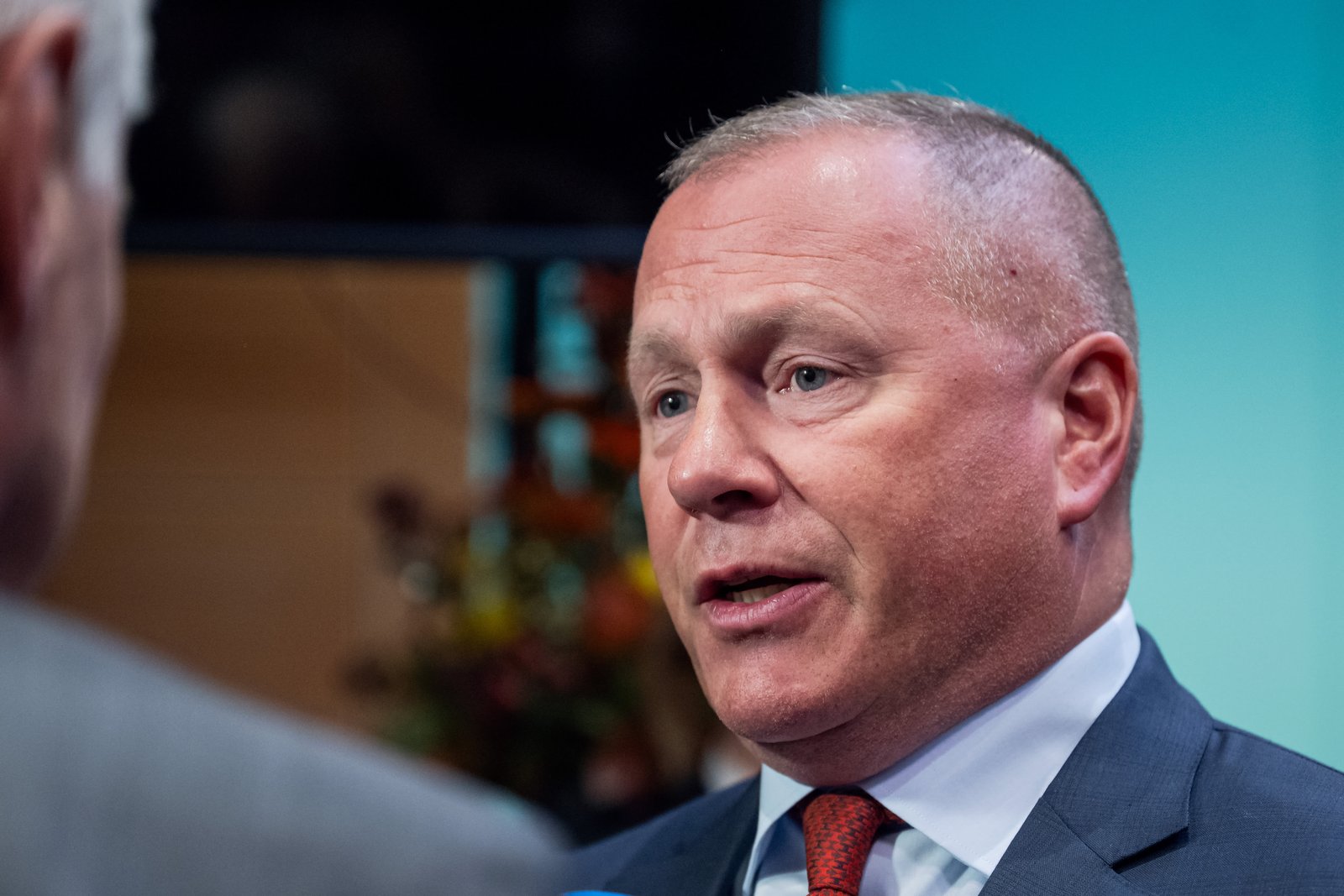
Trond Grande, the fund’s deputy chief executive, addressed the question investors wanted answered. The whole chain around artificial intelligence has been volatile, he said, from the companies building models to the operators of data centers, the energy suppliers feeding them and the chipmakers selling into them.
If adoption of the technology slows, Grande said, stock markets would feel it. He added that he does not regard the situation as a systemic risk. That distinction, between a sharp correction and a crisis, is the one the fund’s managers have been making repeatedly this year.
The fund has been underweight some large technology stocks for a while, relative to the benchmark it is measured against. Executives said that positioning has been in place for some time and that there are no plans to change it now. The underweight is a standing decision rather than a new trade.
That stance has cost money during the run-up. Benchmark-relative returns suffer when the excluded stocks outperform, and the largest technology names have outperformed for most of the past three years. The fund has accepted that drag as the price of not holding more of a small group of companies than its own risk framework suggests.
Bond losses are a different matter and a newer problem. Yields rose in the quarter, which pushes prices down, and a portfolio that holds government and corporate debt across many currencies feels that in every market at once. For a fund that uses bonds as ballast against equity risk, the ballast failed at the same time the engine stalled.
The quarter also illustrates a structural tension in the fund’s mandate. It is required to hold a diversified portfolio across asset classes, and diversification only helps when the correlations behave as expected. In a quarter where bonds fell and equities went nowhere, there was no offset to be found.
Analysts said the result will feed a debate in Oslo about how much of the portfolio belongs in fixed income at all. The fund has been allowed to increase its allocation to unlisted assets, including renewable energy infrastructure, and each quarter like this one strengthens the argument of those who want a broader mandate.
The counterargument is liquidity and transparency. The fund publishes holdings and returns in unusual detail, and its political legitimacy rests on the public being able to see what it owns. Unlisted assets fit awkwardly with that obligation, which is why the expansion has been gradual.
Currency matters as well. The fund reports in kroner but earns in dollars, euros, pounds and yen, and the krone’s moves can swamp the underlying investment return in any single quarter.
For the Norwegian government, the practical consequence is limited. The fund exists to convert oil revenue into a permanent stream of returns for a country of 5.6 million people, and its spending rule is based on expected long-term returns rather than quarterly marks. A bad quarter changes the fiscal conversation less than it changes the headlines.
For everyone else, the report is a reading on how the biggest investor in the world sees the AI trade. Grande’s description of the chain, from model developers through data-center operators to energy suppliers and chipmakers, shows how many separate businesses now depend on the same assumption about demand.
That assumption is what the fund is hedging against, quietly and by weight rather than by exit. It still owns the stocks. It owns fewer of them than the index says it should, and it has been willing to lose relative performance for the privilege of that choice.
The next quarter will show whether bonds recover enough to restore the offset. Yields, central bank decisions and the price of long-dated government debt will determine that, and none of it has much to do with artificial intelligence.
What the report settles is smaller and more useful. The largest pool of savings in the world made no money in three months, lost a chunk of it in the safest part of the portfolio, and said the concentration in technology stocks is still a risk worth underweighting. All three statements came from the same institution in the same document.
Grande’s refusal to call it systemic is the part that matters most. A correction inside a sector is a price event. A crisis is a funding event, and nothing in the Norwegian numbers suggests banks, borrowers or currencies are under strain.
Norway will publish again in three months, with the same disclosures and the same willingness to name the risks it is avoiding. Investors who want to know where the largest fund in the world thinks the danger sits do not need to guess.