Arvind Krishna spent most of IBM’s third-quarter earnings call on the subjects chief executives usually defend: revenue growth, software margins, the mainframe cycle. Then an analyst asked about inference costs, and the chief executive answered with arithmetic his sales force has evidently been carrying into customer meetings for months.
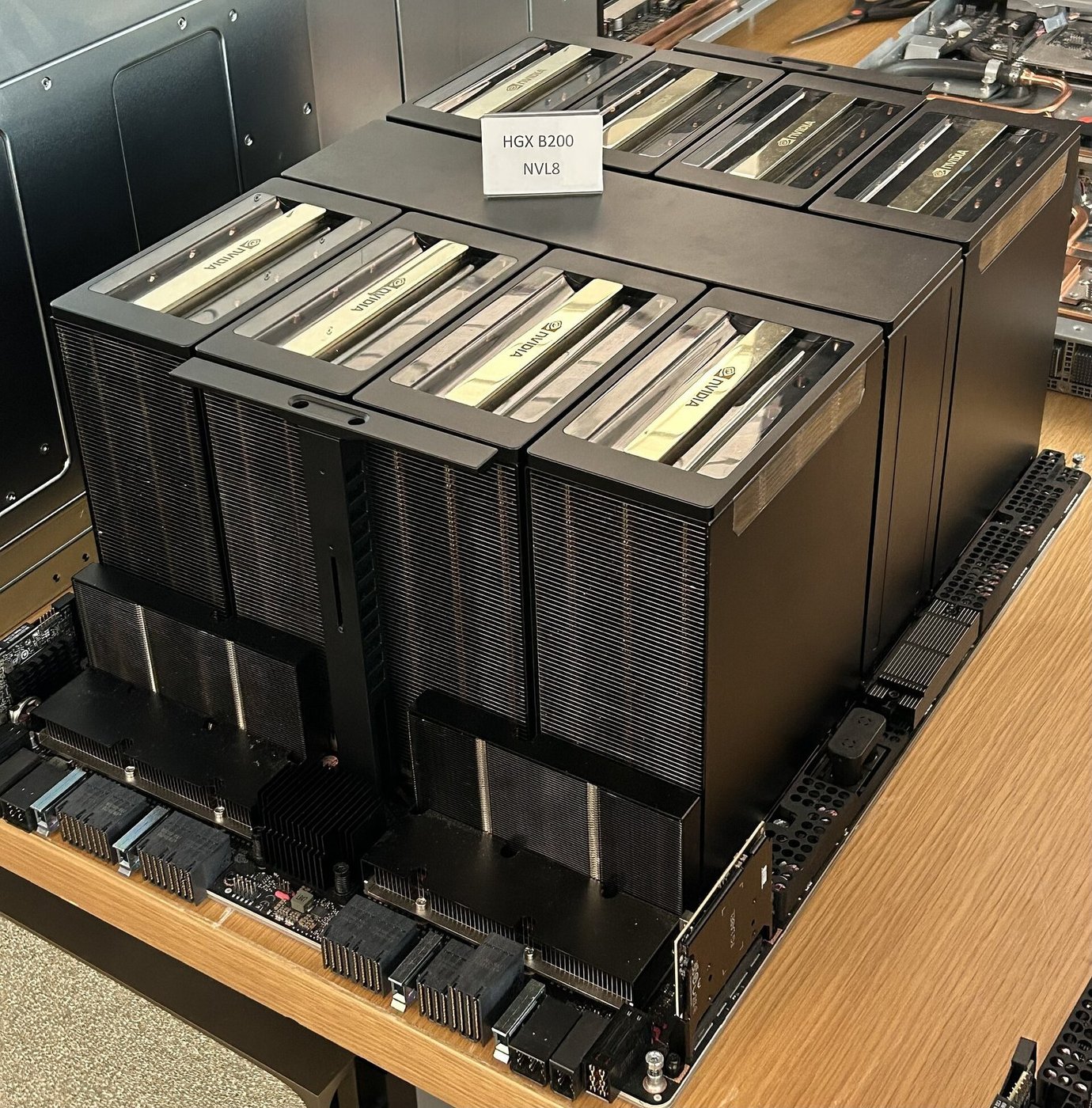
Open-weight models, he said, now deliver results “90 percent as effective” as the best closed systems at “anywhere from 25 percent to 10 percent of the token cost.” He put the hardware bill at two or three racks. Then he framed the decision as a binary that any procurement committee can follow.
“Would you like something that’s 10 percent of the cost if it’s 90 percent as good as the best, or do you want to pay that 10 times higher cost?” Krishna said on the October 21 call, according to a transcript.
The pitch arrived attached to a quarter that was solid rather than spectacular. IBM reported revenue of $17.1 billion, up 5%. Software grew 9% to $7.8 billion, with Red Hat up 11% and its annual recurring revenue up 30%. Infrastructure rose 5% to $3.7 billion, helped by the z17 mainframe family. Mainframe revenue itself fell 20%, which the company attributed to the product being eighteen months into its cycle. Net income was $2.19 billion, or $2.30 a share, against $1.74 billion and $1.84 a year earlier. Adjusted earnings of $2.95 beat the $2.86 analysts expected. The shares slipped anyway in after-hours trading, which says less about the quarter than about how much IBM has taught investors to expect from software.
What Krishna was really selling is a change in the shape of the AI bill. Enterprises that spent the past two years piloting frontier models have discovered that the cost of answering a question does not fall when the novelty wears off. Every email summary, every contract clause review, every customer-service reply carries a per-token charge that recurs for as long as the system runs. That charge sits on the operating budget rather than the capital budget, which is why it draws the attention of chief financial officers in a way that a research project never does.
His argument is that for a wide class of everyday work, the last ten percent of model quality buys nothing a business can use. Summarizing an email thread, extracting obligations from a supplier contract, drafting a reply to a routine complaint, answering a call about a delivery date: these tasks have tolerant error bars and human review downstream.
“Some do” require the best model, he conceded. “But the vast majority” do not.
The second half of the case is about where the model sits. A rack or three in a company’s own data center means the data does not travel, the latency is predictable, and the cost curve is a depreciation schedule rather than a meter running on someone else’s invoice. That is the pitch behind sovereign AI, the phrase European and Asian governments have used to describe systems that keep citizen data inside national borders, and it is the reason IBM has spent two years building a software stack around other companies’ open models instead of competing at the frontier.
The gap in the argument is operational, and Krishna was unusually candid about it. Running inference well is not the same as downloading weights. He asked, rhetorically, where the enterprise finds kernel engineers, who manages the network so that the model is clustered on GPUs close enough to talk to each other, who handles caching so that answers arrive fast enough to be useful. Most companies do not have those people. IBM’s answer is to sell them software that hides the problem, and to sell them Spyre accelerator cards for the z17 to run some of the work on hardware they already own.
There is also a measurement problem. Ninety percent is a blended figure across benchmarks that weight reasoning, coding, and instruction-following differently. On long, multi-step tasks where an agent has to plan and correct itself, the shortfall tends to compound rather than stay flat, which is precisely where enterprises want to push next. A model that is nine-tenths as good at summarizing is fine. A model that is nine-tenths as good at closing a month-end ledger is not, because the failure arrives at the end and costs the whole run.
Competitors are not standing still on price. The frontier labs have cut list prices repeatedly as they spread fixed training costs over more tokens, and a cheaper frontier model narrows the ratio Krishna was describing. If the multiple falls from ten to four, the procurement meeting gets harder to win.
What IBM is betting on is that buyers do not compare benchmarks, they compare the second-year bill. A company that has run a pilot for six months has a usage curve, and the curve is what gets shown to the board. On that comparison, two racks and an open model look less like a compromise and more like the only version of the project that survives a budget review.