The dogs themselves are not the asset yet. The asset is a set of frozen cell lines, drawn from Belgian Malinois and German shepherds, catalogued in a biobank and waiting to be edited, cloned and grown into animals that can find a hidden explosive in a room full of noise.
Warhound, the U.S. company behind the effort, has closed a $200 million financing at a $1.2 billion valuation, according to people familiar with the round. Investors include In-Q-Tel, the nonprofit strategic investor tied to U.S. intelligence agencies, along with Sequoia Capital and 8VC.
The approach is unusual enough that it needs explaining. Warhound takes cell lines from the two breeds that dominate military and police working-dog programs, stores them, and then uses gene editing to remove traits that hurt performance and to insert traits that improve speed and scent detection. The edited cells become embryos, the embryos become dogs.
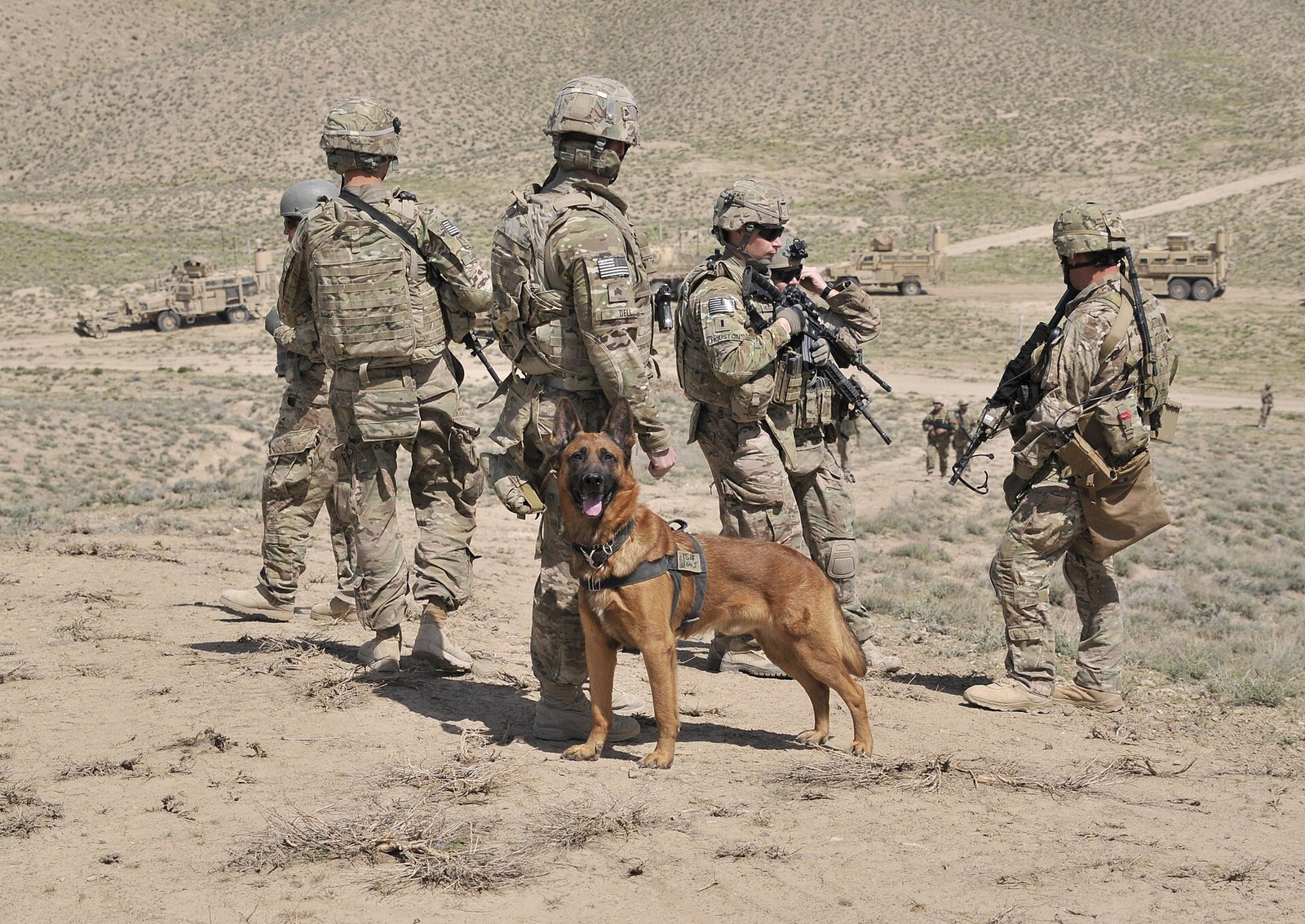
The company’s stated goal is a working animal that can detect explosives and conduct search and rescue with more consistency than breeding has managed. Breeding a detection dog is slow, expensive and unpredictable; a large share of animals that enter training never qualify for deployment. Editing and cloning promise to compress that pipeline and to reproduce a dog that already proved itself.
Hardware is part of the pitch. Anduril, the defense technology company, is supplying upgrades to the protective vests and goggles the dogs wear, turning the equipment into a sensor platform that streams data back to handlers in real time. A dog working a building would generate a record of what it smelled and where, rather than a handler’s recollection afterward.
Colossal, the de-extinction and genetic-engineering company, holds equity in Warhound and licenses technology to it. Cloning runs through Viagen, Colossal’s animal-cloning subsidiary, which already clones livestock and pets commercially. The first cohort of animals is moving into cloning and embryo development now, with births expected early next year and deployment within two years, according to the company.
The commercial model has a precedent in agriculture and in laboratory animals, where edited and cloned lines are sold as breeding stock rather than as one-off products. A dog that clears certification becomes a template, and templates can be reproduced at a marginal cost that breeding cannot match.
Demand for that pipeline is not hard to explain. Militaries and police departments buy working dogs from a small number of breeders, many of them in Europe, and the supply has never matched demand. Buyers have complained for years about price, about lead times and about how many animals wash out of training after months of investment.
Investors are betting that the constraint is biological and can be engineered away, in the same way that seed companies engineered away crop variability. If the technology works, the unit economics of a working dog change: fewer animals trained to produce the same number of deployable ones.
The regulatory path is less clear. In the United States, intentional genomic alterations in animals fall under review by the Food and Drug Administration, a process designed for food animals and laboratory models rather than for dogs that will walk through airports. How that review applies to a cloned, edited working dog has not been settled in public.
The buyer list matters as much as the check. In-Q-Tel invests on behalf of U.S. intelligence agencies and rarely backs a company without a route to a government customer, so its presence in the round will be read by procurement offices as a signal. Sequoia and 8VC bring the growth-stage playbook, which in defense technology has meant scaling production before the orders arrive.
Welfare questions follow. Editing animals for jobs raises a different set of concerns than editing them to resist disease, and the people who train working dogs are not uniformly enthusiastic about a supply that comes from a freezer instead of a whelping box. Handlers have argued that the bond between dog and handler, built over months, is part of what makes the animal effective.
The capital side is easier to read. In-Q-Tel’s participation signals government interest in the capability; Sequoia’s signals a belief that this becomes a category rather than a contract. Defense technology has been one of the busiest corners of venture investing since 2023, and biology is now being pulled into it, with dogs as the first application.
Warhound’s $1.2 billion valuation, on a company with no deployed animals, is a statement about expectations rather than revenue. Comparable defense-tech rounds have been priced on contract pipelines; this one is priced on a biological timeline that has not yet produced a single working dog.
The test arrives in about two years, when the first edited animals either pass certification or do not. If they do, the company will have shown that a trait can be selected in a cell line and delivered in an animal, which is a much larger claim than a dog that smells well.
If they do not, the lesson will be the older one: that the nose, the nerves and the willingness to work in a dark building are harder to write into a genome than the pitch deck suggests. The company’s answer is that the first cohort settles the question, not the argument.